Does bee pollen expire? Yes. Bee pollen is a biological food product, and its quality changes with time. Fats can oxidise, vitamins and phenolic compounds can decline, and poorly stored pollen can also absorb moisture or support microbial growth. Bee pollen is one of several harvested hive products covered in our Beehives, Equipment & Honey guide.
TL;DR: Keep bee pollen sealed, cool and protected from moisture and light. Fresh pollen is best kept frozen unless the producer gives different instructions; dried pollen should be stored airtight in a cool, dry place. Discard pollen that shows mould, unusual moisture, fermentation, insect contamination or a strong rancid smell. Do not assume old pollen is safe just because it looks normal.
What Is Bee Pollen?
There are a few different products that people casually call “bee pollen.” In this article, I mean the small pollen pellets collected from returning foragers with a pollen trap.
Bees collect floral pollen, moisten and pack it for transport, then store some of it in comb. Inside the hive, stored pollen can develop into what we call bee bread. Our guide to how bees collect and use pollen explains that process in more detail.
Commercial bee pollen may be sold fresh, frozen, dried or freeze-dried. That matters because the storage method changes both shelf life and food-safety risk. Other hive products need different handling; for example, our guide on how to clean propolis covers another commonly harvested material.
Does Bee Pollen Expire?
Yes. Bee pollen contains proteins, carbohydrates, lipids, vitamins, minerals and phenolic compounds. Many of these components change gradually during storage.
The lipid fraction includes unsaturated fatty acids that can oxidise over time, producing rancid flavours and reducing quality. Vitamins and phenolic compounds can also decline, especially when pollen is exposed to heat, oxygen or light.
Quality loss and food safety are separate issues. Poorly stored bee pollen can absorb moisture, ferment or support mould and bacterial growth, particularly when it starts with a high water content. An old product should not be assumed safe simply because the main obvious change is taste.
The robust outer wall of a pollen grain can survive for a very long time in the environment, which is why palynology can identify ancient pollen. That does not mean the nutrients inside an edible pollen product remain unchanged for years.
What Does Bee Pollen Taste Like?
On average, pollen tastes a bit like a sour marshmallow combined with the strange metallic flavour you get from a dry bean or pea. It has a floury texture and is not really what I would call delicious.
I actually do not know a single person who has ever said to me, “I love the taste of pollen.” If you want to eat it, it is usually easier mixed into yoghurt, a smoothie or something else that masks the texture.
Is Bee Pollen Sweet?
Sometimes. Bees can moisten pollen with nectar or honey during collection and packing, and floral origin also changes the flavour. I have tasted pollen that is mildly sweet, pollen with almost no sweetness and pollen that is distinctly bitter.
How to Extend the Shelf Life of Bee Pollen
The simplest preservation rule is to control temperature, moisture, oxygen and light.
Fresh Bee Pollen
Fresh bee pollen commonly contains enough moisture to support rapid deterioration. For this reason, freezing is widely used after harvest.
Recent storage studies support freezing as a good way to preserve vitamin C, phenolic compounds and antioxidant activity compared with warmer storage or conventional drying. That directly contradicts the old statement that freezing “speeds up oxidation of lipids.”
Dried Bee Pollen
Dried pollen is more stable because lower moisture reduces microbial growth, but it should still be kept in a tightly sealed container away from heat, humidity and direct light.
If a commercial product has a best-before date and specific refrigeration or freezing instructions, use those rather than a generic shelf-life estimate.
Vacuum or Low-Oxygen Packaging
Reducing oxygen exposure can slow oxidative deterioration. Vacuum packaging or inert-gas packaging can therefore help maintain quality, provided the pollen has already been processed and stored safely.
That is a packaging technique, not a substitute for temperature and moisture control.
What About Storing Pollen in Honey?
Honey can reduce oxygen exposure around pollen, and bees naturally store pollen with nectar and honey in the comb. But a homemade pollen-and-honey mixture should not automatically be treated as a shelf-stable preservation method. Moisture content, cleanliness and storage temperature still matter. If you are comparing honey products, our guide to raw honey and pure honey explains the terminology.
How Can You Tell If Bee Pollen Has Gone Bad?
Do not use taste alone as a safety test. Discard bee pollen if you notice:
- visible mould;
- unexpected moisture or clumping in a product that should be dry;
- fermentation, fizzing or an unusual sour smell;
- a strong rancid or paint-like odour;
- insect contamination;
- damaged or unsealed packaging; or
- storage outside the manufacturer’s recommended conditions for an extended period.
Rancidity mainly tells you that fats have oxidised and quality has declined. Microbial spoilage is a different problem, which is why an old product cannot be declared safe simply because it does not smell rancid.
Does Bee Pollen Have Health Benefits?
Bee pollen contains nutrients and a wide range of plant-derived compounds, but composition varies enormously with floral source, geography, season and processing. That makes broad supplement claims difficult to generalise.
I have eaten pollen for many years and still do not particularly like the taste. I also used to describe it as a remarkable cure for my hay fever. That is my personal experience, not a conclusion that should be presented as established medical evidence.
Bee pollen is not a proven cure for hay fever, and there is a more important safety issue: people with pollen allergy can react to bee pollen supplements. Published case reports include severe reactions and anaphylaxis.
If you have pollen allergy, asthma or a history of severe allergic reactions, speak with a qualified health professional before using bee pollen as a supplement.
In Conclusion
Bee pollen does expire, but the useful question is not simply whether it has passed a date on the packet. Storage conditions determine how quickly its nutritional quality declines and whether moisture or microbes become a safety problem.
Fresh pollen is best kept frozen unless the producer specifies another method. Dried pollen should be kept cool, dry, dark and airtight. If it looks mouldy, smells fermented or strongly rancid, has become unexpectedly damp or has been poorly stored, discard it.
{ }
}
Bee Pollen Storage FAQs
Does bee pollen expire?
Yes. Bee pollen changes over time as fats oxidise and vitamins and other bioactive compounds decline. Moisture, oxygen, light and temperature all affect how quickly quality falls.
How should bee pollen be stored?
Keep bee pollen sealed, protected from moisture and light, and follow the producer’s storage instructions. For fresh pollen, freezing is one of the best-supported ways to preserve quality. Dried pollen should still be kept cool, dry and airtight.
Can bee pollen go mouldy?
Yes. Fresh bee pollen can contain substantial moisture, which can support bacterial and fungal growth if it is not dried, frozen or otherwise stored correctly. Visible mould, unusual moisture, fermentation or an off smell are reasons to discard it.
Does freezing bee pollen damage it?
Freezing can cause some gradual changes during long storage, but research generally supports freezing as an effective preservation method for fresh bee pollen. It does not support the claim that freezing simply speeds lipid oxidation and should be avoided.
How can you tell if bee pollen has gone bad?
Discard bee pollen if it has visible mould, moisture where it should be dry, an unusual fermented or rancid smell, obvious insect contamination, or packaging that has failed. Do not rely on taste alone to judge safety.
How long does bee pollen last?
There is no single shelf life for all bee pollen because fresh, dried, freeze-dried and commercially packaged products behave differently. Use the best-before date and storage directions on the product, and keep it cold or dry as appropriate.
Can bee pollen help hay fever?
Bee pollen should not be described as a proven cure for hay fever. Evidence for allergy treatment is inadequate, and bee pollen itself can trigger allergic reactions, including anaphylaxis, especially in people with pollen allergy.
Who should be cautious about eating bee pollen?
People with pollen allergies, asthma or a history of severe allergic reactions should be especially cautious and should seek medical advice before using bee pollen supplements. Serious allergic reactions have been reported.

Dr Garth A. Cambray is a beekeeper, biotechnologist and researcher with nearly three decades of practical beekeeping experience. He holds a PhD in Biotechnology from Rhodes University and has worked extensively in honey production, fermentation biotechnology and value-added bee products. View Dr. Garth Cambray’s credentials, research and experience.
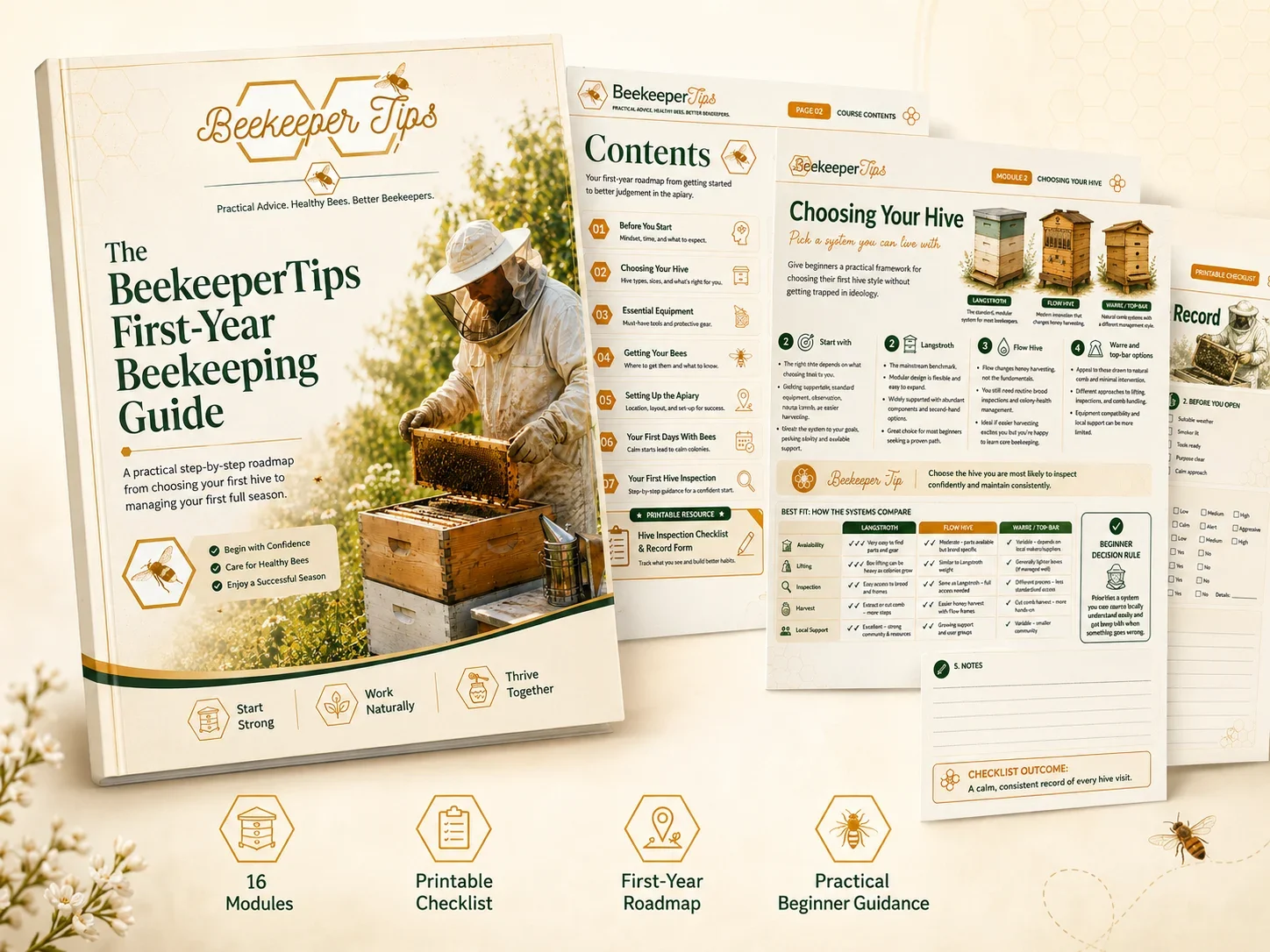
Ready to Start Beekeeping?
Take the next step with our free beginner beekeeping guide. Learn what equipment you need, how to set up your first hive and what to expect during your first season.
You Might Also Like:
 Ultra Bee Pollen Substitute: When and How to Use It
 How to Keep Your Beehive Dry with a DIY Quilt Box for Bees
 Winter Bee Feeding Ideas for Beekeepers [How to Guide]
 How Do Bees Get Pollen From Flowers?
 Best Wax Moth Traps for Beehives: A Complete Beekeeping Guide
 How to Ventilate a Beehive in Summer and Winter