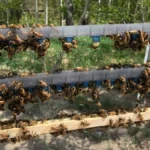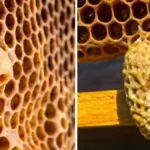
A honey bee colony can remain without a laying queen for several weeks and still recover, provided it has suitable young brood from which to raise an emergency queen or a beekeeper intervenes. A queen develops in about 16 days from the egg, but an emergency queen may be started from a larva that is already a few days old. After she emerges, she still needs time to mature, mate and begin laying, so a perfectly normal brood break can extend for several weeks. This process sits within the wider queen-replacement and colony-reproduction guidance in our Queen Bees & Swarming guide.
TL;DR: Queenless does not automatically mean doomed. If a colony has eggs or very young larvae, it may be able to rear an emergency queen; if it no longer has suitable brood, it is often called hopelessly queenless because it cannot requeen itself without help. The longer that condition continues, the greater the chance that worker ovaries activate, laying workers appear and the colony becomes difficult to recover.
What Happens If a Hive Loses Its Queen?
Queen bees sometimes die. Virgin queens have to go on mating flights, and sometimes they do not come back. Sometimes a clumsy beekeeper will squash a queen by mistake while working a hive; there are many surprisingly easy ways for a colony to lose its reproductive centre.
The first thing to remember is that absence of the old queen does not necessarily mean disaster. If the colony still has eggs or sufficiently young larvae, workers can begin raising replacement queens in emergency queen cells. This is one of the colony’s built-in insurance policies.
Rearing an Emergency New Queen
A queen takes about 16 days to develop from egg to adult. In an emergency, however, the workers are usually starting with brood that the old queen has already laid, so the replacement queen may emerge sooner than 16 days after the queen was lost. Once she emerges, a virgin queen normally needs several more days to mature before mating flights, and weather can delay the whole process.
This is why a colony can appear to have no queen and no eggs for a while even when everything is actually progressing normally. A virgin queen is also much harder to spot than a big, settled laying queen. The practical inspection techniques in how to find the queen bee in a hive can help before you conclude she is absent. Before declaring the colony hopelessly queenless, give some thought to the brood timeline and look carefully for queen cells, emerged queen cells and signs that a virgin queen may be present.
When Does a Hive Become Hopelessly Queenless?
Beekeepers generally use the term hopelessly queenless when the colony has no queen and no eggs or young larvae from which it can raise another one. The important word here is not really hopeless; it means the colony cannot solve the problem by itself with the brood it currently has. A beekeeper may still be able to rescue it by adding suitable young brood, a viable queen cell or an introduced queen.
Timing matters because honey bee brood keeps ageing after the queen disappears. Once the last suitable female larvae have passed the stage at which the colony can rear them as queens, that self-rescue window has closed. From then on, continued queenlessness also removes part of the social suppression that normally keeps worker ovaries inactive.
A Hopelessly Queenless Hive
In a truly hopelessly queenless hive there are no suitable eggs or young larvae left from which the workers can rear a queen. That makes brood-frame reading particularly important. If you are unsure what normal sealed brood should look like, start with what capped brood looks like. If you are still learning your way around brood comb, the broader Beginner Beekeeping guides are useful background, and this article on Beehive Frames Without Foundation also shows why being comfortable reading natural comb matters.

As queen and brood signals decline, some workers may begin activating their ovaries. In ordinary Apis mellifera workers, those workers have not mated and therefore lay unfertilized eggs, which develop into drones rather than female workers. Once laying workers become well established, recovering the colony becomes much more difficult because the colony can behave as though it already has a reproductive individual present.
The old description of a queen being the only thing holding the colony’s social structure together is a little too simple, because brood pheromones and worker interactions also help regulate reproduction. For the opposite condition, our guide to a queen-right hive explains the signs of a normally functioning queen. But the practical observation remains sound: prolonged queenlessness changes the behaviour and reproductive physiology of the worker population. Leave it long enough and the colony gradually loses the ability to replace ageing workers.
Queenless Hive Behavior
When I open a queenless hive there are often behavioural clues before I have finished reading the brood. The bees can seem unsettled, skittish and less socially cohesive than a normal queenright colony. I have also heard the characteristic change in sound that beekeepers often describe as a queenless roar or hiss, particularly when the colony is disturbed.
These behavioural signs are useful clues, but I would not diagnose queenlessness on sound or temperament alone. Colonies vary, weather changes behaviour, and smoke can make bees react in all sorts of ways. I once was employed to make hopelessly queenless hives for a research project and was savagely attacked by one of them, so the popular idea that queenless bees are always less defensive is definitely not a hard-and-fast rule.
Queenless Hive Symptoms
The best diagnosis comes from combining brood evidence, queen-cell evidence and the colony’s behaviour rather than relying on one symptom. No eggs, no young larvae and no queen cells can be worrying, but the same brood gap can also occur while a virgin queen is maturing or a newly mated queen has not yet started to lay. Work through the timeline before assuming the worst.
Early Stage: No New Eggs
Soon after queen loss, the colony will stop receiving new eggs from the old queen. You may still see larvae and capped brood because those bees were laid before she disappeared. As the days pass, the brood pattern therefore looks progressively older until there is eventually no worker brood left emerging behind it.
If the colony has made emergency queen cells, their stage can help you estimate what is happening. An emerged cell may mean a virgin queen is already in the hive, while intact developing cells tell you the colony is still in the replacement process. This is one reason it is dangerous to tear down every queen cell before working out why it is there.
Advanced Stage: Laying-Worker Eggs and Drone Brood
Once laying workers are established, the brood pattern often becomes much more chaotic. You may see several eggs in a cell, eggs stuck to cell walls rather than neatly positioned on the floor, and scattered drone brood where worker brood should normally be. The old description of the cell looking like a bowl of rice is exaggerated, but anyone who has opened a badly laying-worker colony will understand the picture.
Multiple eggs alone are not absolute proof because a newly started queen can occasionally be untidy. The stronger warning is the combination of irregular egg placement, no normal worker-brood pattern and increasing amounts of drone brood. At that point the colony is no longer simply waiting for a queen; its worker reproductive physiology has changed.
Without successful requeening, the workforce eventually declines because drones do not replace the workers doing the colony’s normal jobs. Robbing pressure, season, food stores and colony strength determine how quickly the situation deteriorates, so there is no useful universal rule that every queenless hive collapses after exactly six or seven weeks. It is still a sad thing to watch a once-proud hive lose its organisation, and my old analogy remains: a badly queenless colony starts to look a bit like a failed state.
What Should You Do With a Queenless Hive?
First confirm that the colony really is queenless. Look for eggs, larvae of different ages, queen cells, an emerged queen cell and the possibility of a virgin queen before adding or removing anything. If the colony has only recently lost its queen and is already raising good emergency cells, the best action may simply be to give it time.
If it has no suitable brood from which to raise a queen, the beekeeper has several possible routes depending on season and resources: add a frame containing suitable young brood, provide a viable queen cell, introduce a queen, or combine the colony with another colony. The right choice depends heavily on whether laying workers are already established and whether drones and mating weather are available. For related swarm-management situations, see Splitting A Hive To Prevent Swarming.
Apis mellifera capensis: The Exception That Gets Weird
Now we get to the Cape honeybee, Apis mellifera capensis, which is an entire encyclopedia of weird on its own. Workers of this South African subspecies can reproduce by thelytokous parthenogenesis, producing diploid female offspring from unfertilized eggs. This is very different from the usual situation in other honey bee subspecies, where worker-laid unfertilized eggs develop into male drones.
Cape workers can also develop queen-like pheromonal and reproductive characteristics and become what are often called pseudoqueens. In queenless Cape colonies, worker-produced female offspring can sometimes contribute to requeening, which gives these bees an unusual route out of a problem that would be much harder for most other honey bees. The offspring can be genetically very similar to the laying worker, although describing them simply as perfect clones hides some of the underlying genetics.
The same biology can become destructive when reproductive Cape workers enter colonies of other honey bee populations. Certain lineages have become social parasites, reproducing inside host colonies and disrupting their normal reproductive organisation. Nature is rarely satisfied with giving us a simple rule when it can produce an exception this interesting.
Frequently Asked Questions
How long can a hive survive without a queen?
A hive can survive for several weeks without a laying queen, especially while capped brood is still emerging and the colony is raising a replacement. Survival is not the same as successful recovery, however. The longer requeening fails, the more the worker population ages and the greater the risk of laying workers and colony decline.
How long does it take a queenless hive to make a new queen?
A queen takes about 16 days to develop from egg to adult, but an emergency queen is often started from brood that is already a few days old. After emergence, the virgin queen must mature, mate and then begin laying, so the total brood break can extend for several weeks. Weather and mating success can lengthen that period.
How do I know if a hive is hopelessly queenless?
A hive is hopelessly queenless when it has no queen and no eggs or sufficiently young female larvae from which it can rear one. No eggs alone are not proof because a virgin queen may be present and not yet laying. Look at the brood ages, queen cells and overall colony pattern before making the diagnosis.
Can a hopelessly queenless hive be saved?
Yes. Hopelessly queenless means the colony cannot rear a queen from the brood it currently has, not that beekeeper intervention is impossible. Depending on the condition of the colony, it may be rescued with suitable young brood, a viable queen cell, an introduced queen or by combining it with another colony.

Dr Garth A. Cambray is a beekeeper, biotechnologist and researcher with nearly three decades of practical beekeeping experience. He holds a PhD in Biotechnology from Rhodes University and has worked extensively in honey production, fermentation biotechnology and value-added bee products. View Dr. Garth Cambray’s credentials, research and experience.
Ready to Start Beekeeping?
Take the next step with our free beginner beekeeping guide. Learn what equipment you need, how to set up your first hive and what to expect during your first season.