
Beehives come in various shapes and sizes, and one of the most popular ones is the Flow Hive®. If you are in the market for a new hive or planning to upgrade an existing one, the Flow Hive is a great option. One of the biggest advantages of this innovative hive is that it lets you collect honey without disturbing the bees.
In this guide, we tell you all about this innovative beehive and how it works.
What is a Flow Hive?
The Flow Hive allows beekeepers to harvest honey with a simple turn of a lever outside the hive. This not only reduces the labor that goes into the honey collection but also minimizes disturbance to the bees.
Since its launch in 2015, this innovative beehive—created by Australian beekeeper Stuart Anderson and his son Cedar Anderson—has revolutionized the beekeeping industry. Its popularity on social media has driven over fifty thousand sales in the United States, and its technology has revolutionized honey collection methods used for centuries.
How Do the Flow Hive and Flow Frames Work
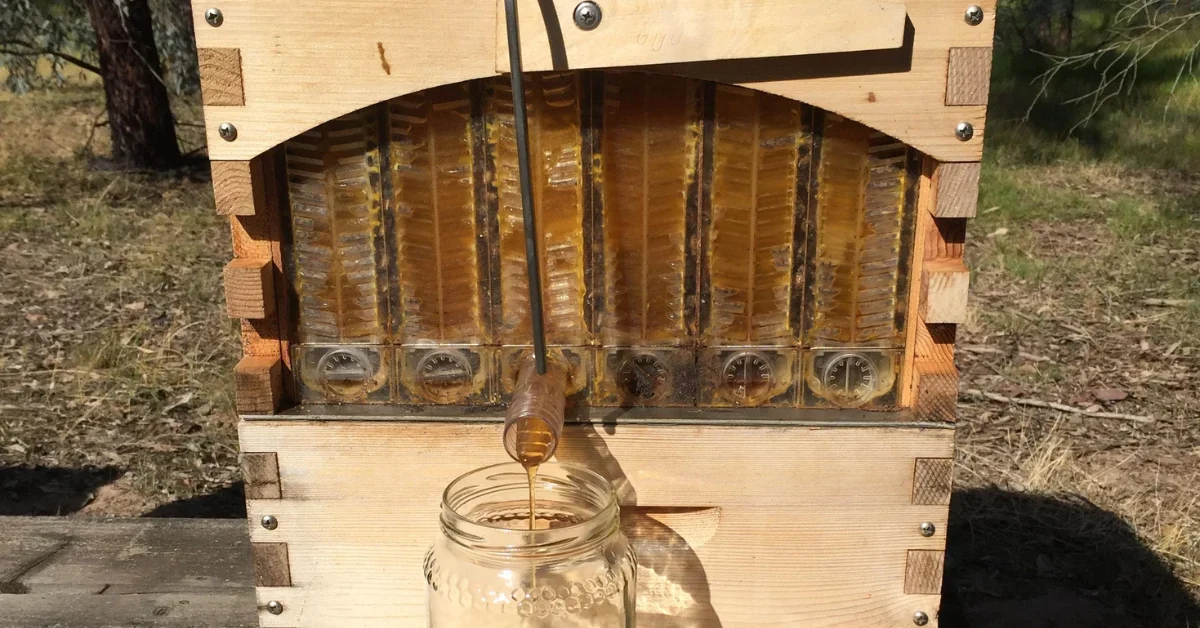
The Flow Hive consists of Flow Frames which have unique combs that help capture the capped honey with the turn of a lever (the flow key). When you turn the lever (which is outside the hive), the key opens up a channel in the cells of the honeycomb. This channel allows the capped honey to drain through a pipe. You simply place a container of your choice under the outlet to the pipe (conveniently placed outside the hive) to collect pure, unadulterated, and great-tasting honey.
The best part about the Flow Hive’s design is that the bees remain undisturbed even as you collect honey from under their feet. Once you have collected the honey, you simply turn the lever back to its original position to restore the cells of the honeycomb to ready them for the next batches of nectar.
Flow Hive Construction
The Flow hive is incredibly versatile. You can either buy the entire Flow Hive starter bundle from the company, or you only buy the frames and modify your existing Langstroth deep hive box. The flow frames are sized to easily fit into a standard Langstroth super of 8 or 10-frame. The supers have two simple cutouts to allow easy honey collection and end-frame observation. You insert the Flow frames the same way as standard conventional frames.
The flow frames consist of partly formed honeycomb cells. Bees complete the cells with their wax and fill them up with their honey before finally capping them off.
When collecting the honey, you insert the key into the bottom slot of the frame and turn it ninety degrees. This splits the cells vertically to form channels through which honey flows to a sealed trough. You can collect the honey through an outlet outside the hive, just like water flowing through a tap and pipeline system.
The bees remain undisturbed on the surface of the comb. Even if a bee remains in one of the empty cells, there is adequate room between the comb walls and it won’t get injured.
Once you finish collecting the honey, reinsert the key into the top slot and turn it ninety degrees. This resets the comb cells which are now ready to be filled. Bees simply chew off the wax capping and fill the cells with nectar and the process repeats.
What Beekeepers Need to Know About The Flow Hive
Flow hive is a great way to enjoy beekeeping because it lets you get honey from a tap on your beehive. However, it is important to note that there is no shortcut to responsible beekeeping. Sure, harvesting honey is certainly a lot less labor intensive than it is with other hives but you cannot simply pop the Flow Hive into your yard expecting to start harvesting honey.
You still need to install a package of bees and manage and care for them as you would with any other hive, using best practices and Beekeeping Tips. You must also routinely inspect the hive and take action when problems arise.
Understand also that the Flow Hive comes with a set of pros and cons. First, the benefits:
Pros of Flow Hive
- Simplified honey harvesting
- Minimized disruption or injury to bees; no need to open the hive, smoke the bees, or carry heavy honey-filled supers.
- Reduced retaliatory stings!
- Attractive and great in a garden setting
- Made using sustainably sourced wood
- You get to enjoy pure, unadulterated honey with different flavors as per the season
- Works in all climates (see ‘cons’ below)
Cons of Flow Hive
Although the Flow Hive’s makers promise that it is made for all weather, some beekeepers disagree. They feel that it is made using thin, unpainted cedar wood which tends to dry out in extreme heat. The flow frames are also made of plastic which does not do well in extreme heat.
Many beekeepers have also experienced their flow hives falling apart after two or three summers. The thin wood also implies less efficient insulation.
Secondly, the cost of installing flow hives is high. Their starter bundle runs into thousands of dollars. This can increase depending on the number of colonies you want to keep. This tends to make Flow Hives an infeasible option for beekeepers on a budget who might be better off paying for a decent Honey Extractor.
Flow hives come with one brood box and one flow box. This means that you end up taking the honey that bees are meant to keep for themselves. Ideally, you should leave at least two deep boxes for the bees. Not many beekeepers are aware of this fact.
Ultimately, the biggest problem with the flow hive, is that first time beekeepers believe that because of the flow frame, they do not need to open the hive for inspection. This is incorrect as you still need to open the hive for inspection to ensure the honey is capped in the frame before harvest. If you harvest the frame uncapped, then you potentially risk your honey batch from spoiling. Hence, your only real saving of the flow hive is the reduced need for a honey separator or extractor, and then hassle of a sticky extract.
Review of the Flow Hive by Dustin Bajer
Is The Flow Hive Right For You?
Despite a few flaws, the Flow Hive is about more than just harvesting honey. Its an amazing design for the ease of harvest of beginner beekeepers and one that can be undertaken safely with children around.
The company is committed to giving back to society and especially to reducing carbon emissions. The makers of Flow Hive also want to expand general interest in the hobby of beekeeping through easy to use equipment which ultimately is good for the planet. They are determined to create a community of educated, empowered beekeepers and highlight the importance of bees to the world.
We hope this article helps you decide if the Flow Hive is right for you. If you enjoyed it, please share!
Flow Hive FAQs
What is a Flow Hive, and how does it work?
The Flow Hive is an innovative beehive design that lets you harvest honey by turning a lever. It uses specially designed Flow Frames that allow honey to flow through a tap system without disturbing the bees.
Do Flow Hives really work for all climates?
While Flow Hives are marketed for all climates, some beekeepers report issues in extreme heat due to the thin cedar wood and plastic components. Proper care and climate adaptation are essential.
Are Flow Hives beginner-friendly?
Yes, but beginners must still learn basic beekeeping practices like hive management, bee health checks, and seasonal maintenance to ensure success with a Flow Hive.
How do I harvest honey from a Flow Hive?
Insert the Flow Key into the frame, turn it, and let the honey flow through a tap system into your container. Once done, reset the comb cells for reuse.
Is the Flow Hive sustainable?
Yes, the Flow Hive is made from sustainably sourced wood, and the company actively supports environmental conservation and beekeeping education.
What are the main benefits of a Flow Hive?
It simplifies honey harvesting, minimizes disruption to bees, reduces stings, and provides an easy way to enjoy pure honey without heavy lifting or extensive labor.
What are the drawbacks of a Flow Hive?
High costs, potential durability issues in extreme weather, and insufficient brood box space for bees are common concerns reported by beekeepers. There is also the possibility of over-extraction of honey which can kill the hive itself if you take too much.
How much does a Flow Hive cost?
A starter Flow Hive bundle can cost several hundred to thousands of dollars, depending on the model and setup size, making it a premium investment over a traditional Langstroth style hive.
Can I use Flow Frames in a standard Langstroth hive?
Yes, Flow Frames are designed to fit standard Langstroth deep supers with minimal modification, making them versatile for existing setups.
Is the Flow Hive right for me?
The Flow Hive is ideal for hobbyists seeking easy honey harvesting with minimal disruption to bees. However, beekeepers must consider the cost, maintenance, and commitment required.

Sam Fielding is an apiary student at The Ohio State University with a strong passion for beekeeping and honey production. Dedicated to advancing the resilience of bees, Sam is actively involved in establishing bee colonies in the lower regions of the United States, including Texas and Florida, as part of a volunteer program. His hands-on experience in these diverse climates has given him a unique perspective on bee health and hive management.
Sam’s dedication to both the scientific and ethical aspects of beekeeping makes him a valuable voice in the apiculture community, advocating for both bee health and consumer rights. He also helps us maintain our facebook page, so feel free to get in touch with him there!
You Might Also Like:
 Ultimate Beehive Showdown: Pros and Cons You Need to Know
 Warre Hive or Langstroth Hive? A Complete Guide for Beekeepers
 How Much Honey Per Frame?
 Ultimate Beekeeping Supplies: Everything You Need to Start
 The Ultimate Guide to Ventilating Your Top Bar Hive
 Top 3 Ways How To Install Wax Foundation In Frames?