
Leafcutter bees are valuable solitary pollinators, and the neat circular holes they cut from leaves are usually cosmetic rather than harmful to the plant. If they are marking roses or another plant you care about, the best response is normally to protect that plant or make other leaf material available rather than trying to kill the bees. This topic also sits within our broader Bees Around the Home & Garden guide.
TL;DR: Leafcutter bees rarely need to be removed. They are solitary, generally non-aggressive and important pollinators. Their leaf cutting usually does not damage plant health. For a prized rose or other vulnerable plant, use fine screening while the bees are active. In my own garden, basil, calla or arum lilies and amaranth also take a lot of the cutting pressure, but that is a practical garden strategy rather than a guaranteed control for every species. For another useful solitary pollinator, see our guide to red mason bees.
If you are still getting familiar with solitary bees and other garden pollinators, our guide to solitary bees is a useful next read. If you are creating nesting habitat, the guide to mason bee hole sizes explains the dimensions that matter.
Do Leafcutter Bees Sting or Bite?
Female leafcutter bees can sting, but they are solitary bees and do not have a large colony to defend. Colorado State University Extension describes them as non-aggressive and notes that stings usually occur when the bee is handled.
I have played with these insects and worked in plants covered in them. On one occasion I was pruning my perennial basil plants and eating a flower when I managed to get one in my mouth. It had every reason to object, but it did not sting me.
A friend of mine once picked up an injured leafcutter bee that had blown into a vehicle. He is an entomologist and was curious about the sting. It eventually stung him on the finger, and he considered it much milder than a typical honey bee sting.
That does not mean a sting is impossible or that everyone will react the same way. The sensible rule is simply not to squeeze or handle the bee unnecessarily.
What Are Leafcutter Bees?
Leafcutter bees are mostly species in the genus Megachile and related groups in the family Megachilidae. They are solitary bees: each female constructs and provisions her own nest rather than living in a honey-bee-style colony.
Females cut neat circular or oval pieces from leaves or petals and carry them back to a nest cavity. They use those pieces to line and partition a series of brood cells, placing pollen and nectar in each cell before laying an egg.
The nests may be in existing holes in wood, hollow or pithy stems, soil, gaps in structures or artificial nesting blocks. Different species use different nesting materials and cavities.
Why Are They Cutting My Roses?
Because the leaf material suits them.
UC IPM notes that leafcutter bees commonly make smooth semicircular cuts along leaf margins. Roses are a familiar target, but they are not the only plants used. The damage looks dramatic because the cuts are so clean and obvious, yet on a healthy plant it is normally cosmetic.
That is the key point. If the plant is otherwise healthy, leafcutter damage is usually not something that needs pesticide treatment.
Should I Kill Leafcutter Bees?
No, not for ordinary leaf damage.
Leafcutter bees are useful pollinators. They visit many flowering plants and some species are important enough that they are deliberately managed for crop pollination. One practical way to increase forage is turning a lawn into a wildflower meadow.
If the only problem is that a rose has neat half-moons removed from the leaves, killing the bee is a poor trade. The plant can usually tolerate the damage, while the bee continues pollinating flowers around the garden.
How to Reduce Leafcutter Bee Damage Naturally
There are two practical approaches: protect the plant you care about, or make the rest of the garden attractive enough that the cosmetic damage is spread around.
Protect a Valuable Plant With Fine Mesh
For a small prized rose or another ornamental that is being heavily marked, physical exclusion is the most dependable approach. UC IPM recommends covering preferred plants with screening or cheesecloth when cutting first appears.
Use a fine mesh that prevents the bees reaching the leaves without crushing the plant. Remove the barrier when the main period of leaf-cutting activity has passed or whenever the plant needs unrestricted access for pollination, airflow or maintenance.
Reduce Nesting Opportunities Where Necessary
If bees are repeatedly nesting in a place where you genuinely do not want them, you can reduce suitable nesting cavities after confirming that no active nest is inside. UC IPM suggests filling suitable holes and sealing the ends of pruned rose canes.
Do not seal an occupied nest simply to get rid of the bee. Developing larvae may remain inside for months.
My Garden Strategy: Give Them Other Leaves to Cut
I normally prefer to work with leafcutter bees rather than against them. In my garden, a few robust plants take an extraordinary amount of cutting without looking any worse for it. That often means my more decorative plants receive less attention.
I would treat this as a practical garden observation rather than a guaranteed behavioural control. Leafcutter species differ in the leaf materials they use, and what works in my garden may not work exactly the same way in yours. For a broader identification overview, see our guide to types of bees.
Perennial and Holy Basil
Perennial basil and holy basil are among my favourite plants for pollinators. They flower heavily, and the leaves on my plants are regularly used by leafcutters. Some of my basil plants end up looking as though somebody fired a shotgun through the foliage, yet they continue growing happily.
The existing basil seed collection includes several basil varieties, including holy basil. Grow varieties suited to your own climate; not every basil behaves as a perennial everywhere.
Basil is also a useful flowering plant for bees, so I like having plenty of it around anyway. Leafcutters are not literally choosing the closest leaf every time, but giving them abundant suitable plants makes the garden a much more forgiving place for a little cosmetic damage.
Calla and Arum Lilies
Calla and arum lilies in my garden also provide broad leaves that leafcutters use regularly. On a warm day it is great fun to watch a female land, cut an almost perfect section from the edge and fly away carrying it.
If these plants suit your climate and garden, the existing calla lily bulb example is one option to look at.
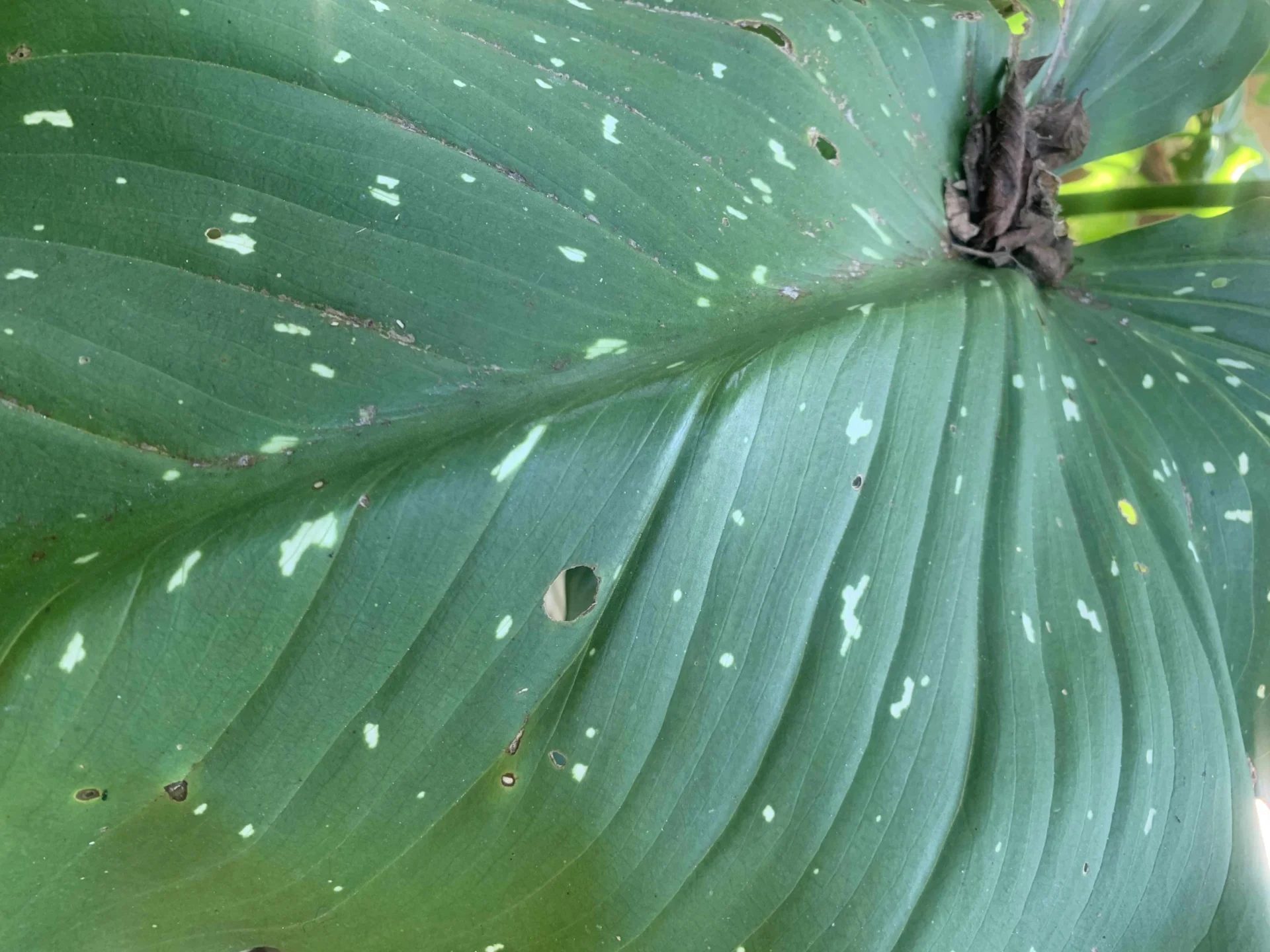
The calla and arum lilies in my garden regularly show the neat cuts made by leafcutter bees.
Amaranth
I also grow amaranth. It gives me plenty of edible young leaves, looks good in the garden and, in my experience, leafcutters happily remove pieces from the older leaves.
The existing red amaranth seed example is the same type of garden plant discussed here. Mine begins quite green and develops stronger red pigmentation as it matures. I like the fresh young leaves in an omelette.
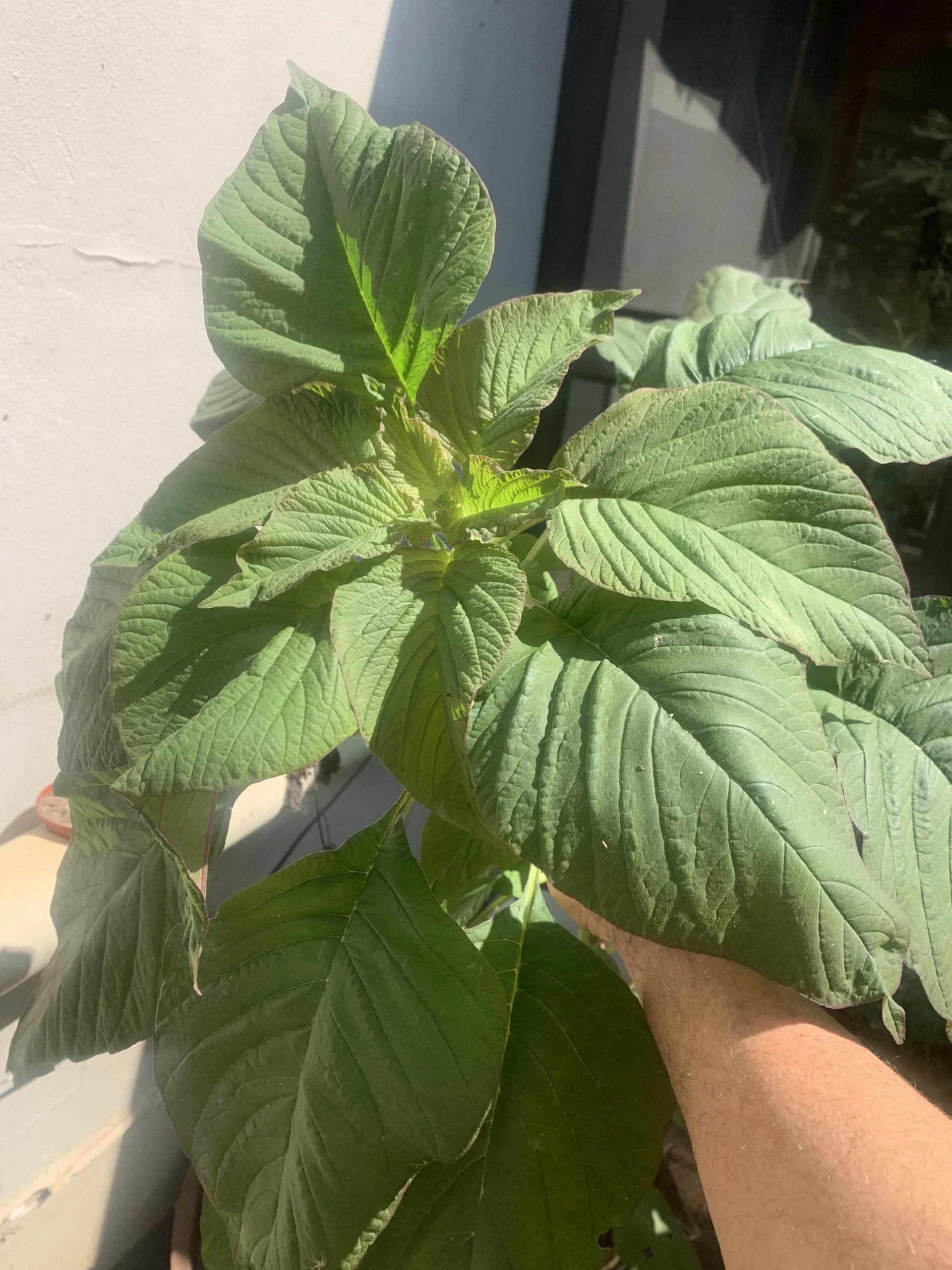
Here you can see fresh leaves at the top and older leaves with pieces cut from the edges by leafcutter bees.
What About the Amazon Product Image?
For the basil section, the text link is enough. A third-party Amazon-hosted product image is not necessary when the article already has useful original garden photographs showing what leafcutter damage actually looks like.
Do Leafcutter Bees Damage Plant Health?
Usually very little. Utah State University and UC IPM both describe leafcutter damage as primarily aesthetic. A healthy established plant can normally tolerate the loss of those small leaf sections.
If a rose or other plant is declining badly, yellowing, losing entire leaves or showing stem dieback, do not assume leafcutter bees are the cause just because you can see a few neat circles. Look for irrigation problems, disease, nutrient issues or other pests as well.
When Leafcutter Bees Really Do Need Managing
Management makes sense when they are repeatedly nesting in a structure you need to maintain, when a valuable plant is receiving unacceptable cosmetic damage, or when an artificial bee nesting block is becoming too dense or difficult to manage.
In those cases, use exclusion and habitat management rather than broad insecticides. Leafcutter bees are active pollinators, so spraying flowering plants to stop cosmetic leaf cutting risks killing the very insects helping the garden.
The Bottom Line
When people ask me how to get rid of leafcutter bees, I normally try to change the question. How do we keep the bees while moving the damage somewhere we care less about?
For a prized plant, mesh is the dependable answer. In a larger garden, robust plants such as basil, calla or arum lilies and amaranth can absorb a surprising amount of cutting in my experience. The damage is usually cosmetic, and the pollination value of these little bees is worth far more than a few perfect leaves. You can also create suitable nesting habitat with well-designed bee hotels.
Leafcutter Bee FAQs
Should I get rid of leafcutter bees?
Usually not. Leafcutter bees are valuable solitary pollinators and their leaf damage is normally cosmetic rather than harmful to an otherwise healthy plant. If one particular plant is being badly marked, protect that plant rather than trying to eliminate the bees.
Do leafcutter bees sting?
Female leafcutter bees can sting, but they are solitary and generally non-aggressive. Stings are uncommon and usually happen when a bee is handled, squeezed or trapped against skin.
Why do leafcutter bees cut circles from leaves?
Female leafcutter bees cut circular or oval pieces from leaves and petals to line and partition nest cells. Each cell is provisioned with pollen and nectar and receives an egg.
Do leafcutter bees live in hives?
No. They are solitary bees. Individual females use existing holes or cavities in soil, wood, hollow stems and other suitable materials rather than forming a honey-bee-style colony.
Will leafcutter bee damage kill my roses?
Usually not. The characteristic smooth semicircular cuts are mainly an aesthetic issue on healthy plants. Serious plant-health problems should prompt you to look for another cause as well.
How can I protect a valuable plant from leafcutter bees?
Cover the plant with fine screening or mesh when cutting first appears, provided the barrier will not create other plant-health problems. UC IPM recommends physical barriers for small valued plants because pesticides are neither necessary nor desirable for this type of cosmetic damage.
Can I stop leafcutter bees nesting in a particular spot?
You can reduce local nesting opportunities by sealing suitable holes and cracks after you are sure they are not occupied. Avoid sealing active nests with developing bees inside.
Can alternative plants reduce leaf damage elsewhere?
Sometimes. Garth has found that basil, calla or arum lilies and amaranth can absorb a surprising amount of leaf-cutting activity in his garden. That is a practical observation rather than a guaranteed control method because different leafcutter species can prefer different plant materials.

Dr Garth A. Cambray is a beekeeper, biotechnologist and researcher with nearly three decades of practical beekeeping experience. He holds a PhD in Biotechnology from Rhodes University and has worked extensively in honey production, fermentation biotechnology and value-added bee products. View Dr. Garth Cambray’s credentials, research and experience.
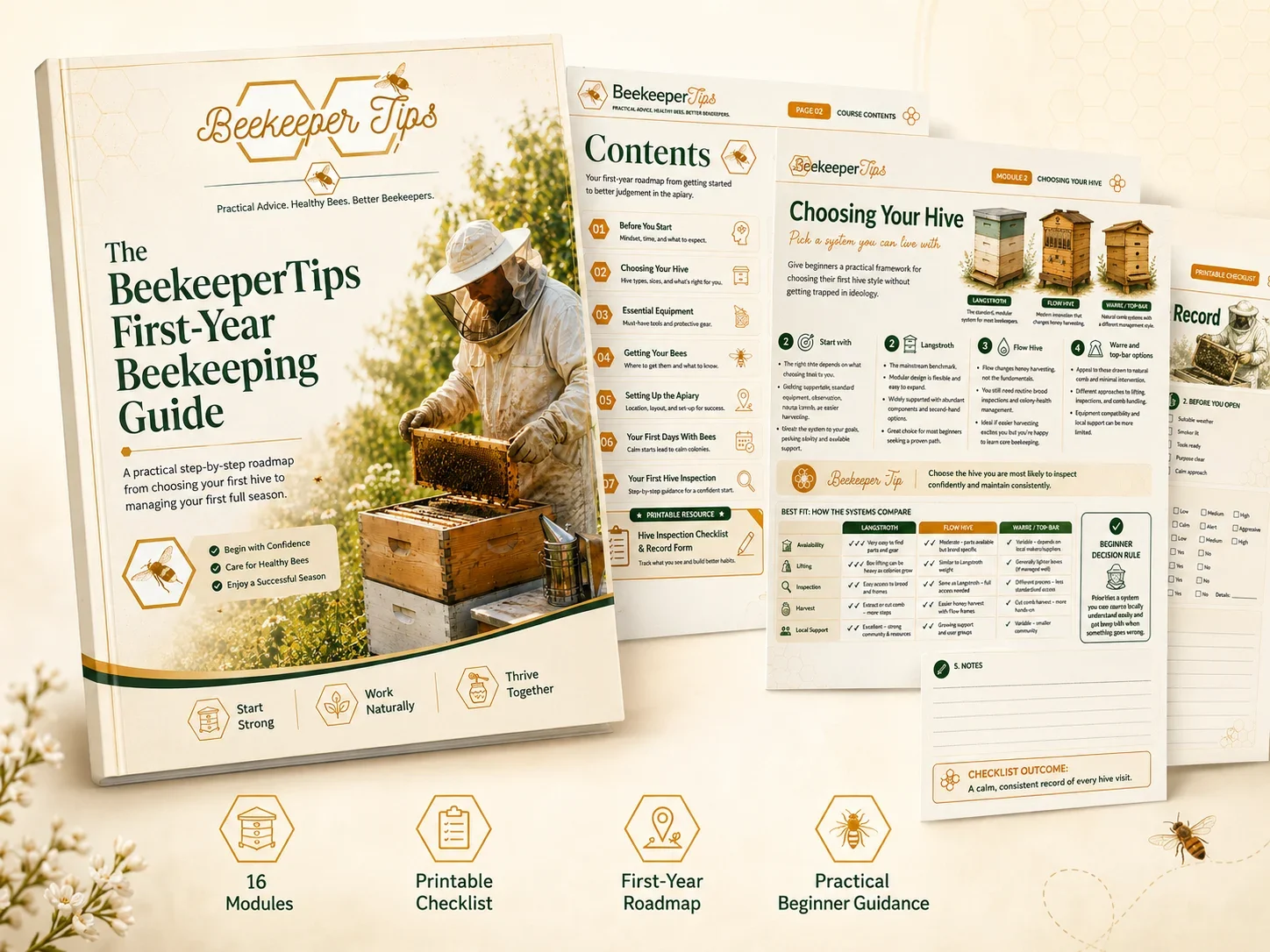
Ready to Start Beekeeping?
Take the next step with our free beginner beekeeping guide. Learn what equipment you need, how to set up your first hive and what to expect during your first season.
You Might Also Like:
 The Best Wildflowers For Honey Bees
 Ultimate Hole Size for Mason Bees and Other Solitary Pollinators [How to]
 Ultimate Guide: Create Stunning Bee Hotels for Your Homestead
 Red Mason Bees: The Ultimate Natural Bee Hive Builders You Need for Pollination
 Top 6 Bee Species Every Beekeeper Should Know About [And How To Tell]
 Ground Bees In Wisconsin: How to Identify and Control