How do you get bees out of your house? First work out what you are dealing with. One lost bee is usually easy to release. A few bees around food or a light normally have a removable cause. Repeated bees entering through the same crack may mean a swarm is scouting the building or a colony is already established inside a wall or roof. This topic also sits within our broader Bees Around the Home & Garden guide.
TL;DR: For one or two bees, open a clear route outside or use a glass-and-paper capture. Remove sweet food and drinks that are attracting foragers. If you see repeated traffic into one cavity, a swarm, or a large indoor cluster, do not spray or seal the entrance — call an experienced beekeeper or bee-removal professional.
If you are still learning the difference between honey bees, bumblebees, wasps and other insects, start with identifying the insect and nest type.
First Make Sure It Really Is a Bee
A surprising number of insects look bee-like at a glance. Hoverflies, bee flies, wasps and yellowjackets can all be mistaken for honey bees, and the right response depends on what the insect actually is.

This is a good example of an insect that can look bee-like at first glance. The large fly-like eyes are a useful clue that it is not a honey bee.
Our guides to yellowjackets and ground nests and the difference between honey bees and bumblebees can help if the identification is unclear.
Why Do Bees Come Into Houses?
There are several common explanations, and each calls for a different response:
- Food: a forager has found fruit juice, soda, honey, syrup, jam or another sweet source.
- Light: a bee has become displaced or trapped around an illuminated window or room.
- Scouting: scout bees are inspecting cavities before a swarm chooses a nest site.
- An established colony: bees are already nesting inside a wall, roof, chimney or other cavity.
- Simple bad luck: one bee flew through an open door or window and cannot find its way out.
Bees Are Collecting Something Sweet
If bees repeatedly visit juice, soft drink, honey, syrup, ripe fruit or another sugary source, remove the attraction first. Cover the food, clean the spill and close the access point if practical.
A successful honey bee forager can recruit nestmates to a profitable food source using the dance language. That does not mean every bee that leaves your kitchen literally returns with a fixed number of friends, but a rewarding food source can certainly attract increasing numbers of foragers.
Once the food is gone, give any remaining bees a route outside. There is rarely a need to kill them.
Bees Are Appearing Around a Light
Honey bees are normally daytime foragers, but disturbed, displaced or trapped bees can move toward illuminated windows and other bright sources. If you find bees indoors around a light at night or first thing in the morning, check where they might be entering rather than assuming the light itself proves there is a hive directly in its line of sight.
Turning unnecessary lights off and closing the window or entry point can help. Honey bees have ultraviolet, blue and green-sensitive photoreceptors and relatively poor sensitivity to longer red wavelengths. A red night light can therefore be less conspicuous to bees than blue or white lighting, although the exact spectrum and brightness of a lamp matter.
Bees Suddenly Appear and Explore Gaps or Cavities
Scout bees from a nearby swarm inspect potential nest cavities before the swarm moves. A few bees repeatedly investigating vents, soffits, wall gaps or similar holes can therefore be an early warning.
If no colony is established yet, exclude access to suitable gaps where this can be done safely. Do not seal an entrance if bees are already living inside the cavity — that can drive them deeper into the building or into living spaces.
If a swarm has clustered on the house or bees are already moving steadily in and out of one opening, contact a beekeeper. Our guide to bees nesting in house walls explains why established structural colonies are a different problem from scouts.
One Bee Just Looks Lost
Bees, much like humans, sometimes make bad navigational choices and end up somewhere they clearly did not intend to be. If it is one bee buzzing against a window, this is usually the easiest situation to solve.
Open a nearby outside window or door and darken the rest of the room if possible so the exit is the obvious bright route. If the bee does not leave, use the glass-and-paper method.
How to Remove One Bee Without Killing It
Wait until the bee lands on a window, wall or other accessible surface. Place a glass, jar or clear container over it, then slide a piece of stiff paper or thin card underneath.
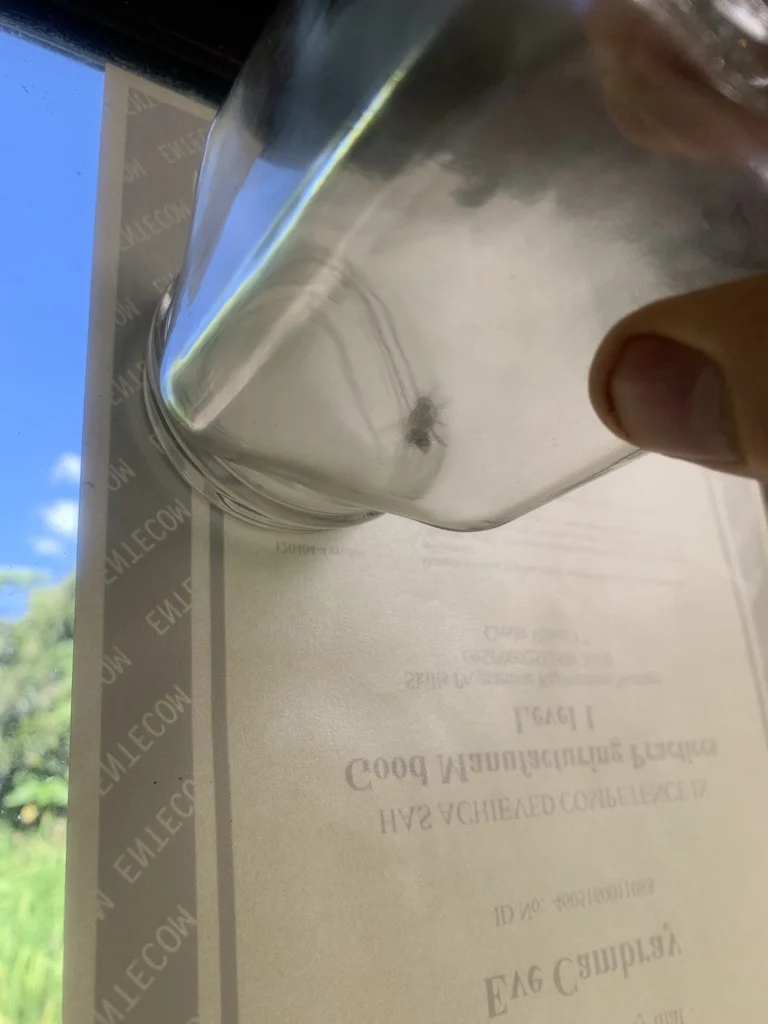
For a bee against a window, place the container over the bee and slide paper underneath.
Keep the paper against the container, carry the bee outside and release it away from people and pets.
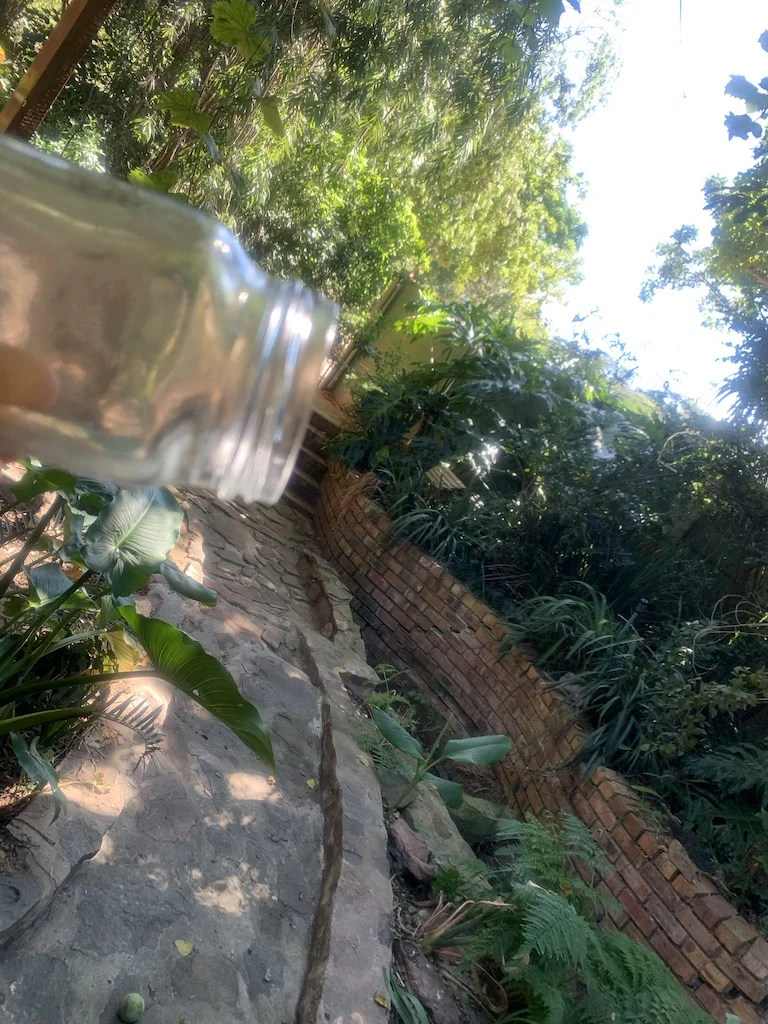
Carry the container outside, then remove the paper and allow the bee to fly away.
A calm bee will often leave without incident, but any bee can sting if trapped, squeezed or handled. If you are allergic to stings or not confident doing this, do not take the risk.
Can You Vacuum Bees Out of the House?
A normal household vacuum can remove a few trapped bees, but it will often injure or kill them. Live bees may also remain inside the hose or collection chamber for some time.
I would therefore treat a household vacuum as a last-resort tool for a small number of indoor bees where safe release is not practical. Do not walk up to a football-sized swarm with a domestic vacuum. That is an excellent way to turn a manageable problem into an angry cloud of bees.
Professional bee removers sometimes use purpose-built bee vacuums with collection chambers and controlled suction. That is quite different from trying to suck an established colony out of a wall with normal household equipment.
Do Not Spray a Swarm or Established Colony
I have had many calls from people in a state of shock after spraying a swarm or hive. A pesticide may not incapacitate every bee immediately, and disturbing a colony can trigger defensive behaviour before the insects die.
A hanging swarm is normally temporary and is often less defensive than an established colony because it has no brood or stored honey to defend. If it is in a safe location, leaving it alone may be all that is required. If it must be moved, an experienced beekeeper can often collect it.
An established colony inside a building is more complicated. Killing the adult bees does not remove brood, comb or honey, and those materials can remain inside the structure. See when soapy water is and is not appropriate for the narrower lethal-control question.
What About Peppermint Oil or Other Bee Repellents?
I would not rely on a homemade peppermint-oil spray to prevent a honey bee swarm from moving into a house. Odours can influence insect behaviour, but there is not a dependable household recipe that substitutes for physically excluding access to a suitable cavity.
If bees are scouting the building, the useful job is to identify and close potential entry points before a colony establishes. If bees are already living inside, arrange proper removal before sealing the cavity.
Bees in the House and Cultural Meaning
Bees have carried symbolic importance in many societies for a very long time, so it is not surprising that people attach meaning to a bee entering the home.
In southern Africa, Garth has written about cultural interpretations of bees and ancestors. A New Yorker account of Nelson Mandela and bees describes a Xhosa interpretation after Mandela was stung by bees at home. Similar folklore about bees, visitors, souls or messages appears in various cultures.
Those traditions are cultural beliefs rather than biological explanations for why a bee is in the room. From a practical beekeeping perspective, identify the insect and then look for food, light, an open entry point, scout activity or an established nest.
When to Call a Beekeeper or Bee-Removal Professional
Get experienced help when you have a large swarm, repeated bee traffic through one structural opening, buzzing from inside a wall or ceiling, a large indoor cluster, difficult roof or ladder access, or aggressive behaviour.
Once comb and honey are inside a wall, proper removal may require opening the cavity and taking out the bees, brood, wax and stores before sealing the access points.
If somebody nearby has a known serious bee-sting allergy, keep them away from the area and do not experiment with DIY removal.
The Bottom Line
Most bees that accidentally enter a house can be released without drama. The important thing is recognising when the problem has moved beyond one lost bee.
Remove attractive food, reduce unnecessary lighting, close access points before a swarm moves in, and use a glass and paper for a single trapped bee. When you have a swarm or an established colony, bring in somebody who knows how to handle bees.
Bees are special creatures. Save them when you reasonably can, but do not put yourself, your family or your neighbours at unnecessary risk to prove the point.
Getting Bees Out of Your House FAQs
How do I get a single bee out of my house?
Close interior doors, open an outside window or door and give the bee a clear route out. If it remains trapped, place a glass or jar over it, slide stiff paper underneath and carry it outside for release.
Why are bees suddenly coming into my house?
They may be following a food source, entering through an open window, being attracted to artificial light, scouting a cavity, or emerging from an established colony in a wall or roof. Repeated bees from the same area deserve closer inspection.
What should I do if bees are scouting my house?
Block access to suitable gaps before a swarm moves in, provided no colony is already established inside. If bees are actively entering and leaving one cavity or a swarm is clustering on the building, contact an experienced beekeeper or bee-removal professional.
Can I vacuum bees out of my house?
A household vacuum can remove a few trapped indoor bees, but it will often kill them and live bees may remain inside the vacuum. It is not appropriate for a swarm or established colony. Professional bee vacuums are designed differently and are used by experienced removers.
Are honey bees attracted to lights at night?
Honey bees normally forage by day, but displaced or disturbed bees can move toward illuminated windows or other light sources. Red wavelengths are much less visible to honey bees than ultraviolet, blue and green, although a red lamp is not guaranteed to be invisible.
Should I spray bees inside my house with insecticide?
Not as a first response. Spraying can provoke defensive behaviour and does not solve an established nest inside a wall. For a large group, swarm or structural colony, keep people and pets away and get professional help.
How do I know whether bees are living inside a wall?
Regular two-way traffic through the same crack, soffit, vent or wall opening strongly suggests an established colony rather than a few lost bees. Buzzing from a cavity, bees appearing indoors from one area, wax or honey odour can provide additional clues.
When should I call a beekeeper or bee-removal professional?
Call for help if there is a swarm, repeated traffic into a wall or roof, a large indoor cluster, difficult access, aggressive behaviour, or anyone nearby has a serious sting allergy. Established structural colonies usually require removal of both the bees and the comb. If the colony needs professional help, see who to call for beehive removal.

Dr Garth A. Cambray is a beekeeper, biotechnologist and researcher with nearly three decades of practical beekeeping experience. He holds a PhD in Biotechnology from Rhodes University and has worked extensively in honey production, fermentation biotechnology and value-added bee products. View Dr. Garth Cambray’s credentials, research and experience.

Ready to Start Beekeeping?
Take the next step with our free beginner beekeeping guide. Learn what equipment you need, how to set up your first hive and what to expect during your first season.