What should you do with a dead beehive? The first job is not cleaning it out — it is working out why the colony died. A winter dead-out caused by starvation or a small cluster is very different from a colony lost to pesticide exposure, American foulbrood, or a severe small hive beetle infestation. Once you know the likely cause, you can make a sensible decision about the boxes, comb, honey, and whether the equipment is safe for new bees. This topic is also covered in our Hive Management & Bee Health guide.
I have opened plenty of dead hives over the years, and the temptation is always to look at a box full of drawn comb and honey and think, “Great, at least I can save that.” Sometimes you can. Sometimes saving a few frames is exactly how you spread the original problem into the next colony, so diagnosis comes before salvage. If you are still building your basic hive-management skills, our Beginner Beekeeping guide will help with the background knowledge behind these decisions.
TL;DR: What To Do With a Dead Beehive
Start with the cause of death. If pesticide exposure or American foulbrood is suspected, isolate the hive and do not eat, extract, feed, or move the honey and comb until you have appropriate local guidance. If the colony died from starvation, queen failure, cold, or a Varroa-related collapse and you can reasonably rule out serious brood disease and contamination, much of the equipment may be reusable after cleaning and sensible pest control.
Do not feed honey from an unexplained dead colony to another hive simply because it looks normal. Honey and comb can move disease organisms between colonies, while wax, pollen and honey can also contain pesticide residues. If the cause is uncertain, a local bee inspector, extension officer, diagnostic service, or experienced beekeeper who can examine the colony is worth far more than guessing.
Why Do Beehives Die?
There are many ways to end up with a dead beehive: starvation, queen failure, severe weather, Varroa mites and associated viruses, brood disease, pesticide exposure, small hive beetles, and combinations of several stresses at once. Bears, baboons, honey badgers and rogue humans can also end a hive rather efficiently, but fortunately they tend to leave less mystery behind. If something has physically torn the hive apart, you normally do not need much diagnostic training to work out what happened.
For the less obvious cases, I work from the causes that could contaminate or infect other colonies toward the relatively harmless ones. Look at the brood comb, stores, dead bees, bottom board, smell, cluster position and obvious pest activity before moving anything. Our guide to lots of dead bees on the bottom board covers some of the clues that can help narrow this down.
Step 1: Rule Out Pesticide or Poisoning
Pesticide incidents can cause a sudden pile of dead or dying bees around the entrance, disorientation and abnormal movement. I have seen poisoned bees hop around looking thoroughly unhappy, and every now and then one shoots out of the entrance almost like popcorn leaving a pot, only to crash into the ground and buzz. That sort of behaviour can be a clue, but it is not a laboratory diagnosis, and poisoning does not always present in exactly the same way.
Some pesticide exposures are particularly difficult because contaminated pollen or nectar can be brought back and stored in the colony. Residues may occur in honey, pollen and wax, so if pesticide poisoning is genuinely suspected I would treat the stores as potentially contaminated rather than trying to decide by taste or appearance whether they are harmless. Keep suspect equipment isolated and contact the appropriate local pesticide authority, bee inspector, extension service, or laboratory if the incident needs investigation.
I have opened pesticide-killed colonies that still contained a surprising amount of beautiful-looking honey. That is precisely why the diagnosis matters: apparently good honey is not automatically safe honey. Do not eat or feed stores from a hive you believe was killed by pesticide exposure, and do not automatically burn contaminated material either — disposal requirements vary with the chemical and jurisdiction. For the food question in more detail, see can you eat honey from a dead hive?
Step 2: Check for Brood Disease
American Foulbrood (AFB)
American foulbrood is the diagnosis that should make you stop moving equipment around the apiary. AFB is caused by the spore-forming bacterium Paenibacillus larvae, and those spores can remain infectious in old equipment for decades. If you suspect AFB, isolate the hive and involve the relevant apiary inspector or authority because notification, treatment and destruction requirements differ between jurisdictions.
Do not keep honey from a confirmed AFB colony for feeding to bees, and avoid running it through extraction equipment because the honey can contain spores and contaminate other gear. In some places infected frames and comb are destroyed, while wooden hive bodies and covers may be recoverable through approved scraping, scorching, irradiation, or other decontamination procedures. A casual soak in household bleach is not a universal cure; even guidance that includes bleach uses it as part of a broader cleaning and treatment process.
European Foulbrood (EFB)
European foulbrood is also bacterial, but it does not produce the extraordinarily persistent spores that make AFB such a headache. Colonies can recover, yet contaminated comb can still contribute to disease persistence. I therefore would not shift brood comb or honey from an EFB-affected dead colony straight into another hive simply because the replacement colony looks stronger.
Fermentation can change a great many things — it is one of the reasons I have spent so much of my life fascinated by it — but it is not a substitute for first deciding whether honey from a diseased colony is appropriate for human use or for movement around an apiary. Honey associated with European foulbrood should therefore be assessed conservatively rather than assuming fermentation makes it suitable for use.
Varroa Mites and Virus-Related Colony Loss
Varroa mites are among the most important causes of managed honey bee losses because they weaken colonies and help transmit damaging viruses. A Varroa-related collapse can leave behind valuable drawn comb and stores, but I would still inspect carefully enough to rule out brood disease before putting that equipment into another hive. Saving a frame is not a bargain if the frame carries an entirely different problem.
If you are confident that Varroa and associated colony stress were the main causes, sound boxes and comb can often be retained after cleaning and appropriate storage. Protect empty comb from wax moth and small hive beetle while it is off the bees. I also prefer not to feed questionable honey or dead brood into another colony merely because it seems wasteful to throw it away.
Small Hive Beetles
A severe small hive beetle infestation is one of those hive problems that attacks several senses at once. The larvae can turn honey and pollen stores into a slimy, fermented, sour-smelling mess, and badly contaminated honey is not fit for human consumption. In severe cases the bees may eventually abscond and leave the beetles to complete the demolition.
Coming from a part of the world where small hive beetles are native, I have had more encounters with these creatures than I would have chosen voluntarily. They are incredibly efficient at turning a valuable super into something that smells as if it should be handled with tongs. Remove badly damaged comb promptly and clean the equipment before storing or reusing it so the beetle population does not simply keep multiplying.
Years ago I experimented with fermenting some beetle-damaged honey and distilling the resulting mead, and the spirit was surprisingly good — slightly sour-mash in character and, after some oak, quite remarkable. I am keeping that story because it happened and it is exactly the sort of odd result that makes fermentation interesting. However, current extension guidance is clear that honey contaminated by small hive beetle excrement is not fit for human consumption, so I would not recommend repeating that experiment as a way to salvage contaminated honey.
Step 3: Was It Starvation, Cold, or Another Winter Dead-Out?
A dead winter cluster is often blamed simply on freezing, but cold is not always the real cause. A small Varroa-weakened colony, inadequate food, poor access to food, excess moisture or a queen problem can all contribute. You may find the bees clustered together, sometimes with heads pushed into cells, and occasionally frustratingly close to stores they could no longer reach.
If there is no evidence of brood disease or pesticide contamination, the boxes and sound comb may be reusable. Remember that capped winter stores are not necessarily harvestable honey: if the colony was fed sugar syrup, some of what remains may simply be stored feed. Our guide to how much honey to leave bees for winter explains why getting winter stores right is so important.
I would still resist giving frames from an unexplained dead-out straight to another colony. Reusing comb that you have good reason to believe is safe is one thing; distributing the contents of a mystery hive around the apiary is another. Diagnosis first, redistribution second.
Can I Put New Bees in an Old Hive?
Yes — in many cases an old hive is perfectly useful for a new colony. If the previous bees died from starvation, queen failure, cold, or another non-infectious management problem, the equipment can often be cleaned and reused. Good drawn comb is valuable because a new colony does not have to turn quite as much honey into wax before it has somewhere to raise brood and store food.
The exceptions are the important part. If AFB is confirmed, or pesticide contamination is suspected, do not simply install another colony and hope the problem disappeared with the old bees. AFB equipment may require destruction, irradiation, scorching, or another approved treatment, while chemically contaminated material may require specific disposal advice. For an ordinary dead-out, scrape away debris, clean the bottom board and boxes, inspect the comb for pests and mold, and store it where wax moths and hive beetles cannot claim it before your new bees do.
Can You Eat Honey From a Dead Hive?
Sometimes. Honey left after an uncomplicated winter loss is a very different proposition from honey in a pesticide-killed colony, an AFB-infected hive, or comb slimed by small hive beetles. You need to know what killed the colony, what treatments were used in it, and whether the honey itself shows signs of contamination before deciding what to do with it.
I am conservative about food from an unexplained dead-out. Capped honey can look beautiful while telling you very little about why the bees around it died. Our separate article on eating honey from a dead hive goes into that decision in more detail.
What About Making Mead With the Honey?
Now we get to a subject much closer to my heart. My background is in fermentation biotechnology and mead, and I hate wasting perfectly usable honey. Once you have established that the colony did not die from pesticide contamination or another problem that makes the stores unsuitable for use, honey that is unattractive, crystallised, or simply not exciting as table honey can have a very enjoyable second life.
For a simple whole-comb mead I have often worked with roughly 40% honey or honeycomb and 60% chlorine-free water by weight. Wild yeasts from the honey can start the fermentation, although a controlled brewing yeast gives a more predictable result. A hydrometer is useful when you want to measure specific gravity rather than ferment entirely by intuition.

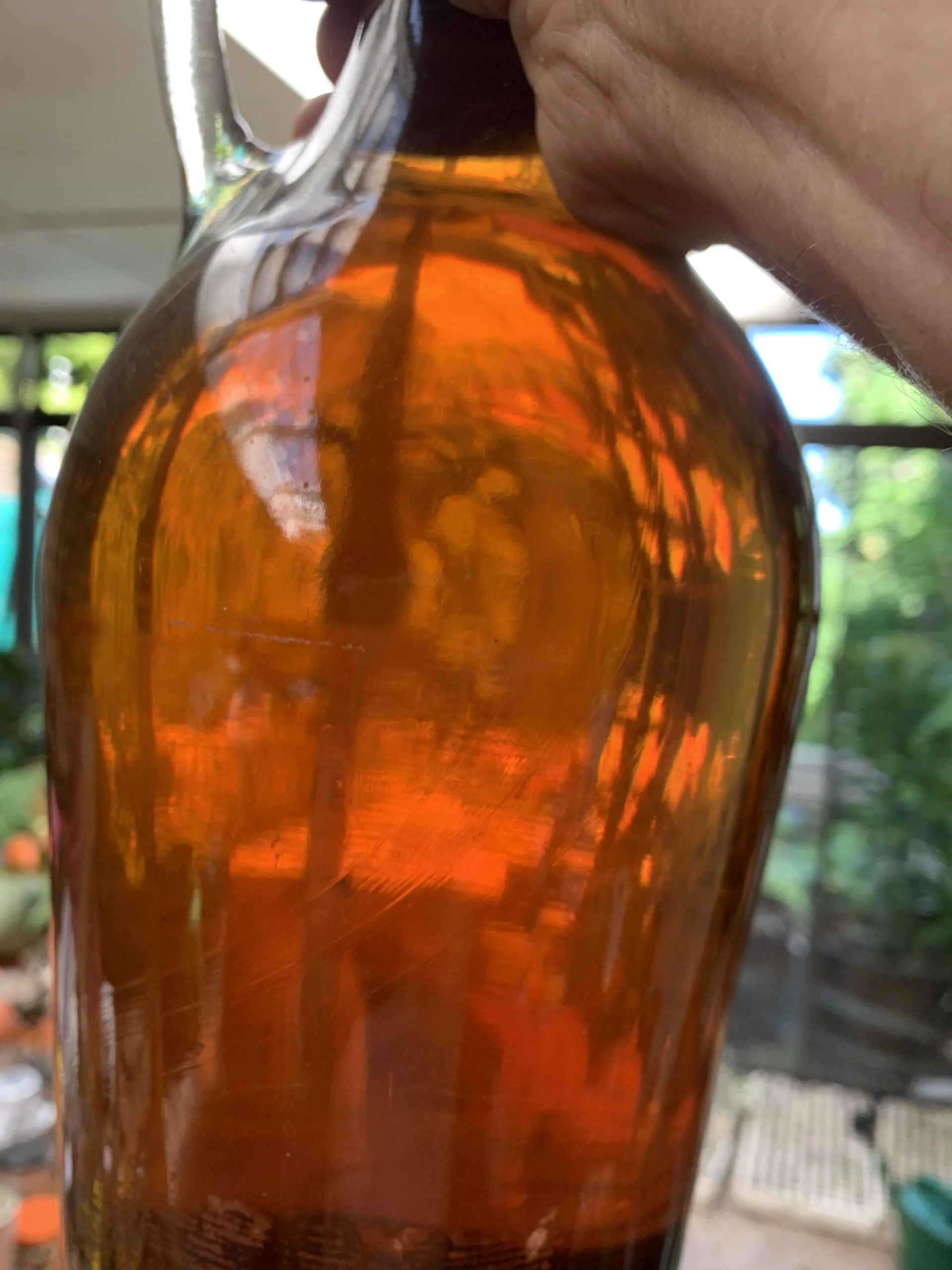
The first photograph shows a bucket of whole-comb mead being made. The second is a seven-year-old bottle of sherry-style whole-comb mead. The flavour became quite extraordinary with age. I normally try to drink these experiments after a few years rather than testing my earlier claim that they might keep for centuries — we still do not live quite long enough for that experiment.
Mead for Distilling
For a more controlled high-gravity fermentation, use the hydrometer to follow the specific gravity and a robust yeast such as Turbo yeast if that suits the fermentation you are trying to achieve. If you are interested in the equipment side, an off-the-shelf distilling kit is another option. Distillation law varies dramatically by country, state and intended use, so check the law where you live before turning fermented honey into spirits.
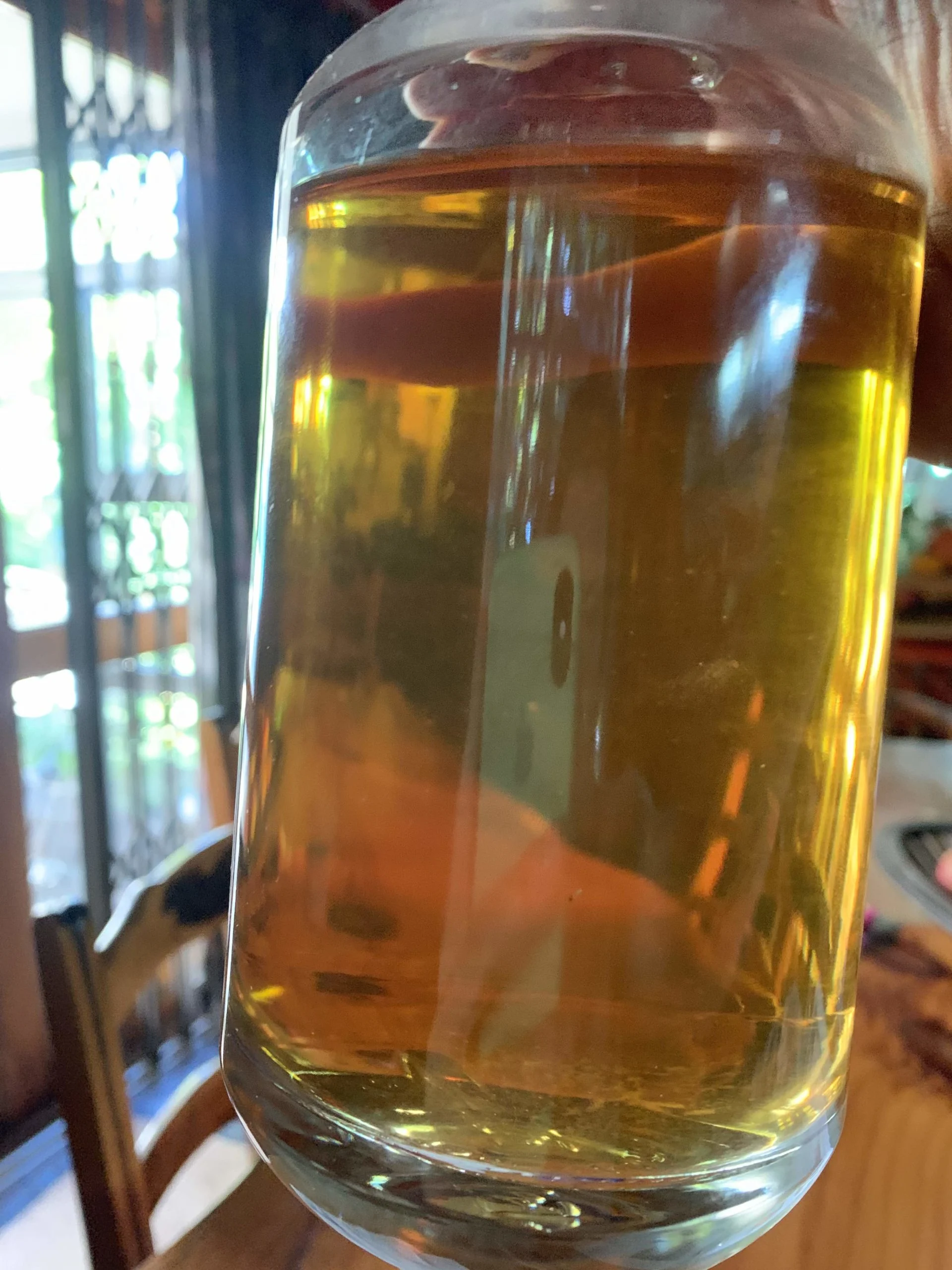
This bottle came from one of my mead-spirit experiments and was aged on a little American bourbon-barrel oak for colour and flavour. Fermentation and distillation can create some fascinating products, but they are not magic decontamination processes: honey from a hive suspected of pesticide exposure, AFB, or severe small-hive-beetle contamination should not be rescued for drinking simply because you own a fermenter or still.
A Simple Dead-Hive Checklist
- Work out the likely cause of death before moving frames or stores.
- Quarantine equipment if AFB or pesticide exposure is suspected.
- Do not feed honey from an unexplained dead colony to other bees.
- Check brood comb, stores, dead bees, Varroa signs, wax moth and small hive beetle.
- Separate reusable boxes from comb requiring disposal or approved treatment.
- Protect sound stored comb from moths and beetles until it is reused.
- Use a local bee inspector, extension service or diagnostic laboratory when the cause is uncertain.
Conclusion
Working out what to do with a dead beehive is really a diagnostic exercise. If the colony died from something relatively straightforward and you can rule out serious disease and contamination, the boxes and comb may save the next colony an enormous amount of work. If the cause was AFB or suspected pesticide exposure, isolate the equipment and follow appropriate local guidance rather than trying to save every frame.
I am all for avoiding waste — beekeeping and fermentation have both taught me that supposedly useless material can sometimes become surprisingly valuable. But a few frames of comb are worth very little compared with spreading disease through an apiary. Work out why the bees died first, decide what is genuinely safe to keep, and only then think about new bees, honey, or mead.
FAQs
Can you eat honey from a dead hive?
Sometimes, but only after you have a reasonable understanding of why the colony died. Honey from an uncomplicated winter loss may be usable, while honey from a hive affected by suspected pesticide exposure, American foulbrood, or severe small hive beetle contamination should not simply be treated as food. If the cause of death is unknown, take the conservative approach until you can diagnose it.
Can I put new bees in an old hive?
Yes, old hive equipment can often be reused when the previous colony died from a non-infectious cause such as starvation, queen failure, or some winter losses. Clean and inspect the equipment first. Do not install new bees into equipment associated with confirmed AFB or suspected chemical contamination until it has been disposed of or treated according to appropriate local guidance.
What should I do first when I find a dead beehive?
Do not immediately redistribute the honey or comb. Inspect the hive for the likely cause of death, paying particular attention to brood disease, pesticide signs, Varroa-related collapse, pests, food stores and the position of the dead cluster. Isolate the equipment if you suspect a transmissible disease or chemical exposure.
Can I reuse comb from a dead hive?
Often yes, provided you can reasonably rule out serious disease and contamination. Sound drawn comb from a colony lost to a non-infectious cause can be extremely useful to new bees, but comb associated with AFB, suspected pesticide exposure, or an unexplained collapse should not be moved into another colony until the risk has been assessed.
How should I store comb after a colony dies?
Once you are satisfied the comb is safe to retain, store it in a way that prevents wax moth and small hive beetle damage. The exact method depends on your climate and storage system, but the key is not to leave unprotected comb sitting where pests can turn a recoverable dead-out into another loss.
References
- Penn State Extension — Honey Bee Diseases: American Foulbrood
- Penn State Extension — Honey Bee Parasites, Pests, Predators, and Diseases
- Oregon State University Extension — Small Hive Beetle
- US EPA — Guidance for Inspecting Alleged Cases of Pesticide-Related Bee Incidents

Dr Garth A. Cambray is a beekeeper, biotechnologist and researcher with nearly three decades of practical beekeeping experience. He holds a PhD in Biotechnology from Rhodes University and has worked extensively in honey production, fermentation biotechnology and value-added bee products. View Dr. Garth Cambray’s credentials, research and experience.

Ready to Start Beekeeping?
Take the next step with our free beginner beekeeping guide. Learn what equipment you need, how to set up your first hive and what to expect during your first season.