
The Flow Hive is worth considering if you want to make honey harvesting cleaner, easier and less physically demanding, and you are comfortable paying considerably more than you would for a conventional Langstroth setup. It solves the extraction part of beekeeping very well, but it does not remove the need to inspect your colony, manage swarming, monitor pests and diseases or understand seasonal food stores. This topic also sits within our broader Beehives, Equipment & Honey guide.
For a hobby beekeeper who values convenience, the Flow Hive can therefore be an excellent system. For someone on a tight budget, planning a larger apiary or expecting “honey on tap” without learning normal beekeeping, a conventional Langstroth will usually make more sense. If this is your first hive, our beginner beekeeping guide covers the management skills that matter regardless of which box you buy.
If you are still deciding between hive systems rather than specifically between Flow models, our starter best hive types for beginners puts the Flow Hive alongside Langstroth, Warré and Top Bar hives so you can compare the broader options first.
TL;DR: Is a Flow Hive Worth Buying?
Yes, for the right beekeeper. A Flow Hive makes harvesting honey remarkably convenient because ripe honey can be drained from individual Flow Frames without removing and conventionally extracting those frames, which means less lifting, uncapping, spinning and cleaning.
The trade-off is price. You are paying a significant premium for the Flow harvesting system, while all of the normal responsibilities of keeping healthy bees remain.
Best for: hobby and backyard beekeepers who value clean, convenient honey harvesting.
Less suitable for: budget-conscious beginners, larger commercial-style apiaries, or anyone hoping the Flow system replaces regular hive management.
What Is a Flow Hive?
The Flow Hive is a Langstroth-style removable-frame beehive built around a patented honey-harvesting system developed by Australian father-and-son beekeepers Stuart and Cedar Anderson. Its key feature is the Flow Frame, which allows honey to be drained from the frame without removing it and processing it through a conventional extractor.
Instead of uncapping each honey frame and spinning it, the beekeeper inserts a Flow Key into the frame and operates the internal mechanism. Honey then moves through channels inside the frame and exits through a tube into a jar or other container, which is why the system is often described as “honey on tap.”
That description is accurate as far as harvesting goes, but it is important not to take it too literally. The honey harvesting is easier, while the beekeeping itself still requires the same attention you would give bees housed in a conventional Langstroth system.
If you are just getting started, remember that the equipment itself will not teach you how to manage the colony.
How Do Flow Frames Work?
Flow Frames contain partially formed honeycomb cells that the bees finish with their own wax. They then fill those cells with nectar, reduce the moisture until it becomes ripe honey and cap the cells in the normal way.
When the frame is ready, the beekeeper inserts the Flow Key into the lower operating slot and turns it. Internal parts of the cells separate vertically, creating channels that allow the honey to run down through the frame into a sealed trough at the bottom, where a harvesting tube carries it out into your container.
Once harvesting is finished, the key is used in the upper slot to reset the frame. The bees then remove or repair the cappings and prepare the cells for another crop, so the basic cycle can begin again.
The clever part is that most of this happens inside the comb structure while the bees remain on the surface. That reduces the amount of disturbance compared with removing full honey frames for conventional extraction.
Do You Really Harvest Without Opening the Hive?
For the actual draining process, yes. Once you know a Flow Frame is ready, you can harvest it externally without dismantling the super and removing every frame in the way you would for conventional extraction.
That should not be interpreted as meaning you never need to open the hive. Flow recommends that first-time users physically inspect Flow Frames before harvesting so they learn how the rear observation window relates to what is happening deeper inside the frame.
Bees do not always fill a frame evenly, so an attractive-looking section near the viewing window does not guarantee the entire frame is ready. The window is useful, but it is not X-ray vision.
Flow Hive Pros and Cons
Flow Hive Pros
Honey Harvesting Is Much Easier
This is the Flow Hive’s strongest advantage and the reason the product exists. Conventional extraction can involve removing full supers, clearing bees from frames, uncapping wax, using an extractor, filtering the honey and then cleaning an impressive number of sticky objects.
With a Flow Frame, you can harvest one ready frame directly into a jar. For a hobby beekeeper producing modest quantities of honey, that convenience is significant.
Less Heavy Lifting During Harvest
A full deep super can be very heavy, particularly when the colony is doing well and the frames are packed with honey. Flow harvesting allows you to remove honey from individual frames while the super remains on the hive, which avoids one of the heavier parts of conventional extraction.
That does not mean you will never lift boxes, because normal hive management may still require access to the brood colony. It does, however, make the honey-harvesting stage considerably easier physically.
Less Honey-Extraction Equipment
A conventional apiary often ends up needing an extractor, uncapping tools, trays, buckets and somewhere to perform the extraction without coating half the kitchen in honey. Flow Frames remove much of that equipment from the harvesting process.
If you are comparing those broader startup requirements, our beginner-friendly essential beekeeping equipment for beginners helps put the hive itself into the context of everything else you will actually need.
You Can Harvest Small Amounts
One particularly useful feature is the ability to harvest individual frames. You do not necessarily need to wait until you have enough honey to justify setting up an entire extraction operation.
This also makes it practical to take smaller seasonal harvests and experience different honey flavours as forage changes through the year. For a backyard beekeeper, that can be a genuinely enjoyable part of the system.
The Observation Windows Are Useful
Flow Supers include viewing areas that let you watch bees working the honey frames without opening the hive. They can help you learn how the colony is using the super and give you an indication of whether frames are nearing harvest readiness.
The important thing is to remember that the visible part of the frame is only part of the story. As you gain experience, the windows become much more useful because you learn what those visible changes mean in the context of the whole frame.
It Is Compatible With Langstroth-Style Equipment
The Flow system is not an entirely isolated hive format. Current Flow Frames are designed around Langstroth deep dimensions, with six Flow Frames fitting the equivalent of an 8-frame deep Langstroth super and seven fitting a 10-frame deep.
You can also add a Flow Super to an existing compatible Langstroth setup, although a conventional box needs appropriate modifications to provide access to the Flow Key and honey outlets. That makes the system more flexible than many people assume.
Flow Hive Cons
It Is Expensive
This is the obvious drawback. Current official US pricing puts complete Flow Hive systems in the several-hundred-dollar range, with premium models costing considerably more than a basic conventional Langstroth setup. Our guide to how much conventional beehives cost gives a useful baseline for judging that premium.
For one or two hobby colonies, you may decide the convenience is worth paying for. As your apiary grows, however, multiplying that premium across many colonies becomes much harder to justify.
A Flow Hive Does Not Make You a Beekeeper
This is probably the biggest practical issue for beginners, although it is really a problem of expectation rather than the equipment itself. The Flow Hive looks extraordinarily simple in demonstrations: turn the key, honey comes out, eat honey.
Unfortunately, there are a few bees involved between steps one and three. You still need to understand brood patterns, queens, swarming, food stores, pests, diseases, seasonal management and colony temperament.
No hive design replaces that knowledge, and a Flow Hive should be seen as a different harvesting system rather than a shortcut around learning beekeeping.
The Flow Frames Are Plastic
Flow Frames use food-grade plastic components rather than being entirely constructed from timber and wax. Some beekeepers are perfectly comfortable with this, while others prefer predominantly timber and natural-comb systems.
That is largely a management and philosophical preference rather than evidence that one approach automatically produces healthier bees. If natural-comb hive systems appeal to you, our practical natural beehive types provides useful context before choosing purely on harvesting convenience.
You Still Need to Inspect the Brood Box
Your queen does not know that you spent extra money on a clever honey super, and Varroa mites do not care either. Swarm cells, brood disease, starvation and queen problems all still happen regardless of how convenient the honey harvest is. Before reaching for the smoker, it is also worth knowing when not to open a beehive because weather and colony conditions still apply to a Flow Hive.
The brood colony therefore requires normal inspection and management. Flow’s own guidance treats brood inspections as a crucial part of keeping colonies healthy, which is exactly how beginners should think about the system. That includes practical skills such as using a beekeeping smoker safely when the colony needs to be opened.
Climate Still Matters
Flow markets its hives for broad climatic use, but a Flow Hive remains a beehive that needs to be managed appropriately for its environment. Cold climates may require winter preparation and insulation, while hot environments require sensible positioning, ventilation and timber maintenance.
The important point is that no hive should be purchased simply because the brochure says it works everywhere. Your bees live somewhere specific, and your management needs to suit that place.
How Much Does a Flow Hive Cost?
Flow Hives are premium equipment, and the important comparison is not simply the purchase price. The better question is how much extra you are willing to pay to simplify honey harvesting.
A conventional Langstroth hive plus extraction equipment may make more economic sense if you plan to keep several colonies. A single Flow Hive may make excellent sense if you only want one or two backyard colonies and dislike the idea of buying, storing and cleaning an extractor. If you want to see what a conventional first setup includes, our beehive starter kit guide provides a useful comparison.
The right answer depends heavily on scale. Convenience has value, but the value changes dramatically depending on whether you have one hive or twenty.
Can You Add Flow Frames to a Langstroth Hive?
Yes. Flow Frames were designed to work with Langstroth deep-format equipment, with six Flow Frames suiting an 8-frame deep box and seven suiting a 10-frame deep box.
You cannot simply put the frames into any untouched box and expect the harvesting mechanism to be accessible, though. If you convert your own Langstroth super, the box needs to be modified so you can reach the Flow Key slots and honey outlets.
This can be a useful middle ground if you already own Langstroth equipment and specifically want the Flow harvesting system without replacing your entire setup.
How Many Brood Boxes Does a Flow Hive Need?
There is no universal answer. The number of brood boxes a Flow Hive needs depends on colony size, climate and local management practices.
One or two brood boxes may be appropriate depending on colony size, climate and local management practices. What works well in a warm region may be very different from what is needed somewhere with a long, severe winter.
The real rule is simpler: do not harvest honey your colony needs to survive. How much honey that means leaving depends on your local conditions and the strength of the colony.
How Do You Know When Flow Honey Is Ready?
Do not harvest simply because you can see honey through the window. The Flow Frames should be properly filled and capped before harvesting, particularly while you are still learning to interpret what the observation window is showing you.
Unripe nectar contains more moisture than finished honey and can ferment during storage. During your first few harvests, physically inspecting the frame is therefore sensible.
Once you understand how your colony tends to fill its Flow Frames, the end view becomes much more informative. This is another good example of where the technology supports an experienced decision rather than replacing one.
Flow Hive vs Langstroth: Which Is Better?
Strictly speaking, this comparison is slightly misleading because a Flow Hive is fundamentally built around Langstroth-style removable-frame beekeeping. The real difference is the honey super and harvesting system.
A conventional Langstroth usually makes more sense if budget matters, you expect to operate several colonies, you want maximum equipment interchangeability and you are happy using conventional extraction equipment. A Flow Hive makes more sense if you want one or a few hobby colonies, clean and convenient harvesting matters strongly to you and you are comfortable paying a premium for that convenience.
If you also want to understand how conventional vertical hive systems compare with a more natural-comb approach, continue with our real-world Warre versus Langstroth comparison.
So, Is the Flow Hive Worth It?
For the right beekeeper, yes. The Flow Hive solves a genuine problem extremely well because conventional honey extraction is heavy, sticky and equipment-intensive, and Flow Frames make that part of the process considerably easier.
For a backyard beekeeper with one or two colonies, that can make the premium price worthwhile. What I would not recommend is buying a Flow Hive because you think it eliminates normal beekeeping.
You will still inspect the brood colony, deal with swarm preparation, assess stores, monitor pests and diseases and learn what healthy bees look like. If you want to learn beekeeping and also enjoy very convenient honey harvesting, a Flow Hive can be a great choice.
If you simply want honey to come out of a box without learning about the insects producing it, bees will eventually correct that misunderstanding for you.
Before committing to the system, our starter best hive types for beginners is worth reading alongside this review so you can see what else your money could buy.
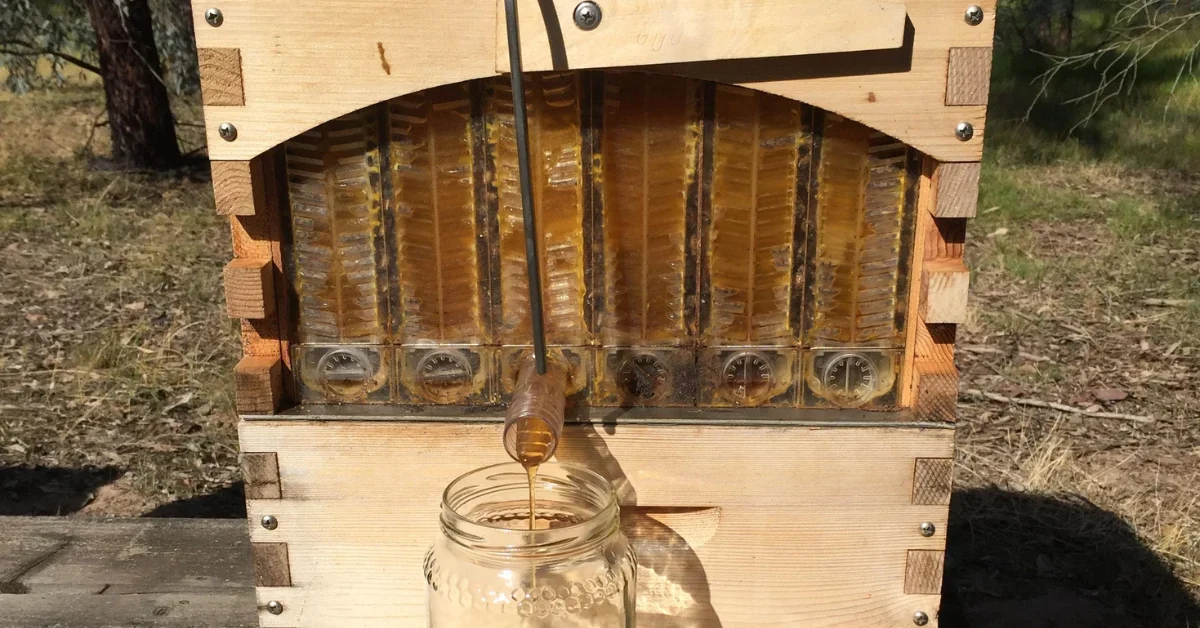
Review of the Flow Hive by Dustin Bajer
Flow Hive FAQs
Does a Flow Hive really work?
Yes. Flow Frames genuinely allow ripe honey to be drained from the hive through an external outlet without conventionally removing and extracting the honey frames, while the colony itself still needs normal inspection and management.
Is a Flow Hive good for beginners?
It can be. The harvesting system is beginner-friendly, but the bees themselves still require normal beekeeping knowledge, so the Flow Hive should be treated as an easier way to harvest honey rather than a substitute for learning colony management.
Do I need to open a Flow Hive?
Yes. You still need to open the hive for brood inspections, colony-health checks and normal management, and during your first Flow harvests it is sensible to physically inspect the frames so you learn when they are properly capped and ready.
Can Flow Frames fit a normal Langstroth hive?
Yes. Six Flow Frames fit an 8-frame deep Langstroth super and seven fit a 10-frame deep, although a standard super needs appropriate modifications so you can access the harvesting mechanism.
Does a Flow Hive need two brood boxes?
Not necessarily. One or two brood boxes may be appropriate depending on climate, colony size and local management practices, so local beekeeping guidance is more useful than applying a fixed number everywhere.
Can Flow Hive honey ferment?
Any honey harvested with excessive moisture can ferment. Make sure the Flow Frames are genuinely ripe and capped before harvesting rather than assuming the visible portion of the frame tells the whole story.
Are Flow Hives suitable for cold climates?
They can be, but winter management still matters. Colony food stores, insulation, hive configuration and local overwintering practices all need to suit your particular climate.
Is a Flow Hive cheaper than buying an extractor?
For a single small apiary, avoiding a honey extractor and associated equipment offsets part of the Flow premium. For multiple colonies, conventional Langstroth equipment and a shared extractor may be much more economical.
What is the biggest disadvantage of a Flow Hive?
For most people, it is the cost. The other major risk is misunderstanding what the system does: it simplifies honey extraction, not colony management.

Sam Fielding is a BeekeeperTips contributor specialising in beginner beekeeping, hive systems, equipment research and practical buying guides. His articles are developed from established beekeeping practices, reputable agricultural and extension resources, manufacturer documentation and scientific literature where relevant.
Sam’s work focuses on helping new and hobbyist beekeepers understand their options, compare equipment and make better-informed decisions about hive setup and management. You can learn more about his areas of focus, research approach and featured articles on his Sam Fielding’s profile.
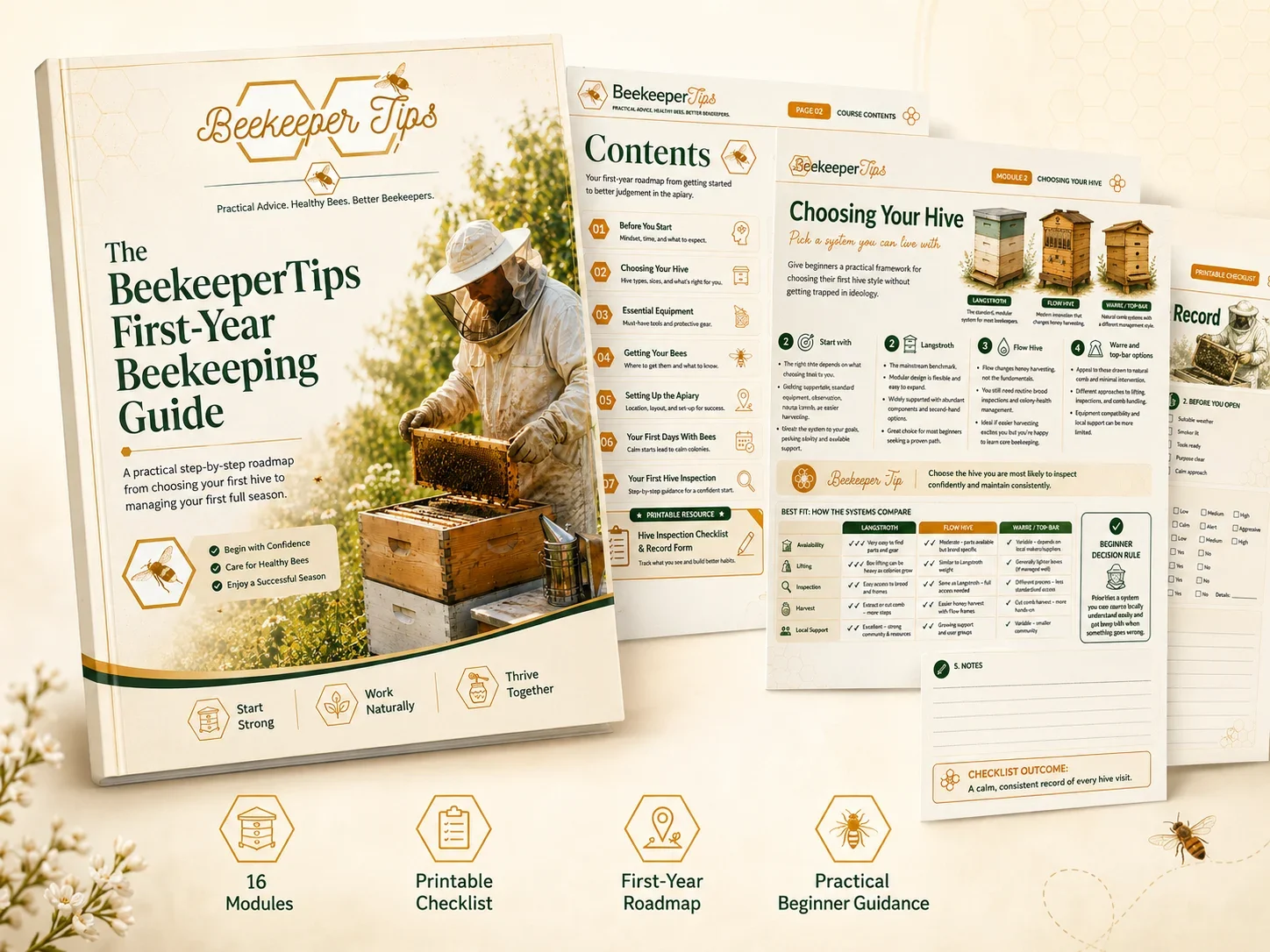
Ready to Start Beekeeping?
Take the next step with our free beginner beekeeping guide. Learn what equipment you need, how to set up your first hive and what to expect during your first season.
You Might Also Like:
 Best Beehive Types for Beginners: Pros and Cons of 5 Popular Hives
 How to Choose a Beehive: Best Types for Beginners
 Warre Hive vs Langstroth: Which Is Better for Beginners?
 How Much Do Beehives Cost? Ultimate Beginner Budget Guide
 How Much Honey Per Frame?
 How Much Does It Cost to Start a Bee Farm?