
In many places, yes, you can keep bees in your backyard, but that does not mean you can simply buy a hive and put it wherever you like. Residential beekeeping laws vary enormously between states, counties and cities, and you may need to register your hives, obtain a permit, observe property-line setbacks or follow rules about hive numbers, water and flight paths. If you are still planning your first setup, our beginner beekeeping guide covers the wider decisions that come before installing a hive.
The other law you need to consider is the unofficial law of living beside other human beings. A perfectly legal beehive can still become a source of endless grief if your bees repeatedly occupy the neighbour’s swimming pool, fly through their patio or become defensive every time somebody starts a lawnmower.
The short answer to “Can I have a beehive in my backyard?” is therefore: probably, depending on your local laws and whether your property is actually suitable for keeping bees without making them everybody else’s problem.
TL;DR
- Backyard beekeeping is legal in many residential areas, but rules vary by state, county and city.
- Check zoning, permits, apiary registration, hive-number limits and setback requirements before buying bees.
- Good hive placement, a reliable water source and managing the bees’ flight path can prevent many neighbour disputes.
- Bees visiting your neighbour’s flowers is normal; bees repeatedly causing a nuisance is a different matter.
- A defensive colony in a small residential yard can become a genuine safety problem.
- Good neighbours and sensible colony management are often as important as the written law.
If you are just getting started, our hands-on beginner beekeeping guide takes you through the other practical decisions that come with setting up your first hives.
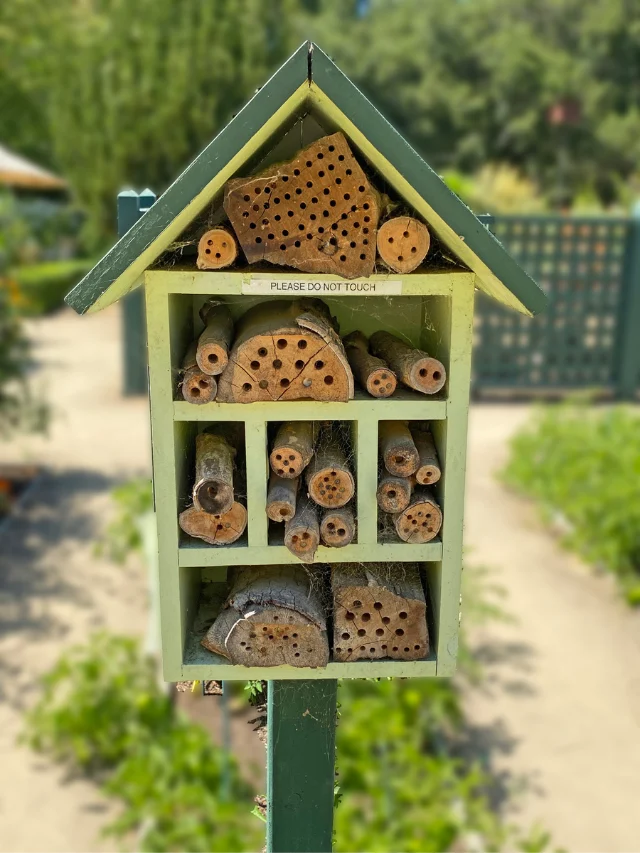
Is It Legal to Keep Bees in a Residential Area?
There is no single answer that applies across the United States. Beekeeping can be regulated at state level and then further affected by county, city, zoning and sometimes homeowners association rules. Some areas require apiary registration, some restrict hive numbers, some specify setbacks and barriers, and others are relatively relaxed.
This means the first thing to do is not ask Facebook whether backyard bees are legal. Find the actual rules that apply to the property where you intend keeping them. Your state Department of Agriculture, city or county planning department and local beekeeper association are good places to start.
Do this before you buy bees. It is considerably easier to discover that your yard cannot legally accommodate three hives before you have three boxes containing 150,000 opinionated insects.
Rules can also change. If you are reading this article several years after it was written, check the current regulations rather than assuming somebody else’s experience in another town applies to you.
What Backyard Beekeeping Laws Commonly Regulate
Residential beekeeping rules tend to focus less on whether bees are inherently good or bad and more on reducing conflict between bees, beekeepers and everybody else.
Depending on where you live, regulations may address:
- whether residential beekeeping is permitted;
- registration of colonies or apiaries;
- the maximum number of hives on a property;
- distances from boundaries, roads, footpaths or neighbouring homes;
- fences, hedges or other flyway barriers;
- hive entrance direction;
- provision of a permanent water source;
- swarm and nuisance management;
- inspections and disease control.
Your local rules matter more than any general distance or hive-number recommendation on the internet.
That is particularly important when deciding how many colonies to establish. Before expanding an urban apiary, our plain-English how many hives one person can manage guide gives some useful practical context around what is manageable rather than merely legal.
Your Neighbours Matter Almost as Much as the Law
Most backyard-beekeeping problems do not begin in a courtroom. They begin over the fence.
A neighbour sees bees drinking from the swimming pool, discovers bees all over a flowering tree, gets stung while gardening or becomes convinced that every bee within several miles belongs to you. Once somebody knows there is a hive next door, every bee suddenly acquires your name and address.
Good residential beekeeping is therefore partly about keeping bees and partly about managing humans. A little thought before placing the hives can prevent an extraordinary amount of trouble later.
Local extension guidance makes the same point: talking with neighbours and explaining what you are doing can prevent misunderstandings, provided you also listen to legitimate concerns rather than dismissing them.
And honey remains one of the finest diplomatic tools ever invented.

“Your Bees Are Stealing My Flowers”
This is one of the more amusing complaints.
Your neighbour notices bees working the flowers in their garden. They know you keep bees and conclude that your bees are taking something that belongs to them.
Bees, unfortunately, have absolutely no understanding of property boundaries. A forager will fly wherever worthwhile nectar, pollen, resin or water can be found, and somebody’s fence does not feature heavily in her navigation calculations.
My preferred first response to this sort of problem is not a lecture on pollination biology. Give the neighbour a bottle of honey.
If they are reasonable, you may suddenly discover they become extremely enthusiastic about “our bees.”
If they remain determined to dislike the bees, take that seriously when deciding whether the location is worth the ongoing conflict. There are situations where being legally correct is still a very inefficient use of your time.
And time is honey.
What If a Neighbour Gets Stung?
This needs a little more care than the original version of this article gave it.
A honey bee found on a flower some distance from your hive is not necessarily one of your bees. Honey bees routinely forage over large areas, and in a suburban environment colonies belonging to beekeepers, feral colonies and other pollinating insects may all be present.
But this should not become an excuse to ignore genuine problems.
If people are repeatedly being stung close to your property, bees are strongly defending an area outside your yard or neighbours cannot reasonably use their outdoor spaces because of activity from your apiary, you need to investigate. The practical question is no longer “Can anybody prove that was my bee?” It is “Is my apiary creating a problem I can fix?”
Move the hive, change the entrance direction, install a barrier, supply water, reduce colony numbers or requeen an excessively defensive colony as appropriate.
That is far more useful than winning an argument.
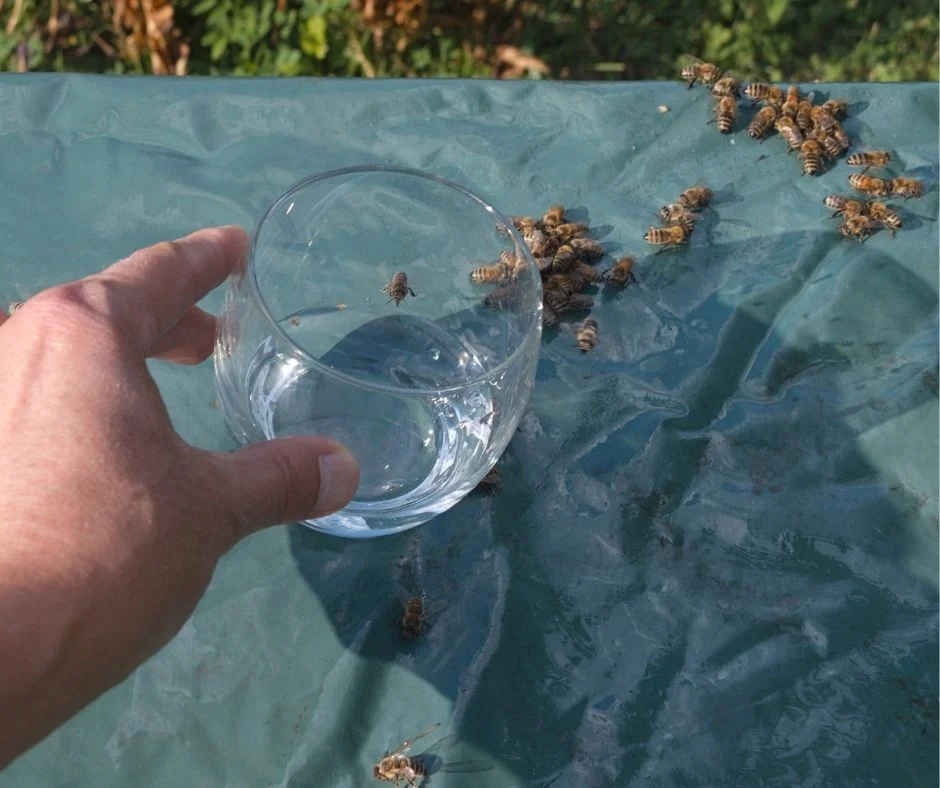
Give Your Bees Their Own Water
Water causes a remarkable number of neighbour problems.
Bees need water for cooling the colony and regulating conditions inside the hive. If the most attractive source is your neighbour’s bird bath, dripping tap, pond, dog bowl or swimming pool, that is where they may learn to go.
Once bees establish a favourite water source, convincing them to change their minds can be surprisingly difficult. I therefore prefer to provide a dependable source of water near the apiary from the beginning; our guide to providing water for honey bees explains some simple ways to do this safely.
This is such a useful nuisance-prevention measure that residential beekeeping guidance and some local regulations specifically address providing water.
The beekeeper provides water; the neighbour keeps enjoying the swimming pool. Everybody wins.
Manage the Bees’ Flight Path
Hive entrance direction matters.
You do not want thousands of bees leaving the entrance at ankle or face height and crossing a footpath, neighbour’s gate, children’s play area or outdoor table. A fence, dense hedge or other suitable barrier can encourage bees to climb above head height shortly after leaving the hive.
Some residential beekeeping rules specifically use this approach. It is a good example of why a blanket statement such as “a hive must be 80 yards from your neighbour” is not particularly useful. Our guide to how far apart beehives should be placed looks at spacing and orientation in more detail.
A well-positioned hive in a smaller yard can sometimes create less conflict than a badly positioned hive on a much larger property.
If the available space is extremely restricted, an real-world observation hive guide may also help you understand why enclosed demonstration hives and normal outdoor production colonies are very different propositions.
The Bigger Problem: When a Colony Becomes Defensive
A genuinely defensive colony is a different matter from a few bees visiting somebody’s flowers.
Sometimes a colony can become extremely unpleasant. When this happens, bees may pursue and sting people, pets or livestock well beyond the immediate hive entrance.
This can occur with different types of honey bees, although genetics, colony condition, weather, queen status and disturbance all influence defensive behaviour. The important thing is that if a colony becomes dangerously defensive in a residential environment, deal with it promptly rather than hoping the neighbours will learn to run faster.
Requeening may solve a genetic temperament problem. Relocation may be the sensible choice where the site itself is unsuitable.
The smaller and more populated your property is, the less margin for error you have.
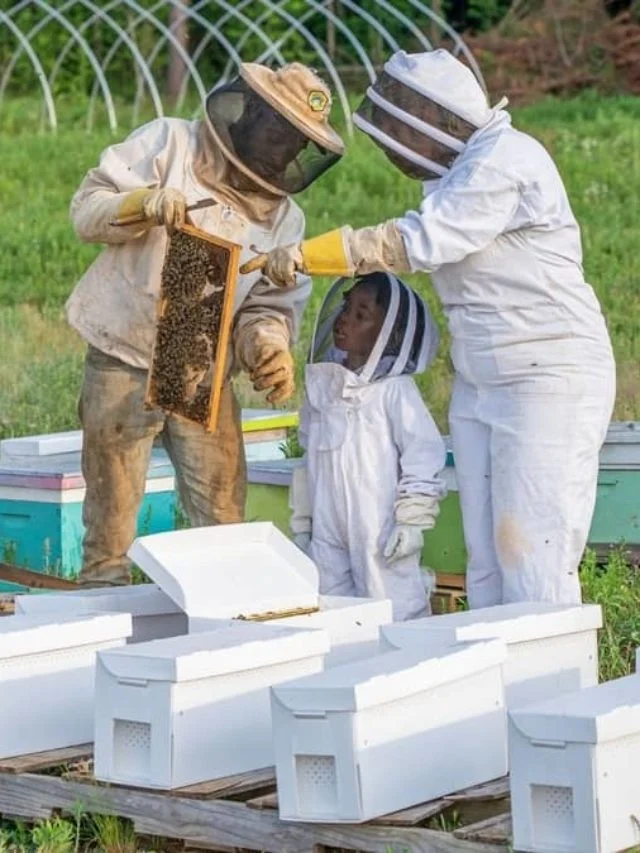
Children and Beehives Are an Interesting Combination
Children are curious animals and occasionally have ideas that are spectacularly incompatible with bees.
When I was a child, a friend and I decided to rob a hive by breaking a hole in its lid with a large rock. This did not go especially well.
There were a lot of stung people, stung pets and dead chickens.
This taught me several things, one of which is that you should not assume children will leave a beehive alone simply because every sensible adult has explained why they should.
If your backyard is accessible to children — yours, the neighbours’ or visitors’ — position or secure the apiary so they cannot casually interfere with it. A fence around the hives can be useful both for controlling access and raising the flight path.
The best bee incident is the one that never occurs.
Lawnmowers, Machinery and Disturbance
Bees and lawnmowers are another combination I try not to encourage.
A running mower creates vibration, noise, exhaust and considerable disturbance close to a hive. Some colonies barely seem to notice; others make their opinion of the situation very clear.
Do not place hive entrances beside areas that must regularly be mowed or where people need to operate noisy equipment. Think about ordinary household activities before deciding where the apiary will go.
A location that appears wonderfully secluded in winter may be exactly where somebody needs to mow every week in summer.
How Many Hives Should You Keep in a Backyard?
Legal limits and sensible limits are not necessarily the same thing.
A regulation might permit several hives, but that does not automatically mean your property can comfortably support that many colonies from a neighbour-management perspective. Each additional colony adds bees, inspections, swarm potential, flight traffic and the possibility that one colony develops a temperament problem.
For a beginner, I would rather see a small number of well-managed colonies than a yard filled to whatever maximum number the ordinance allows.
The surrounding forage also matters. Bees collect resources across a landscape much larger than your property, so if you are considering expanding beyond a couple of backyard colonies, our field-tested beehive stocking rates per acre explains why simply dividing your yard size by the number of hives is not a meaningful way to judge carrying capacity.
And, naturally, every additional hive costs money. This decision becomes much easier once you understand our starter current beehive costs, particularly during your first season.
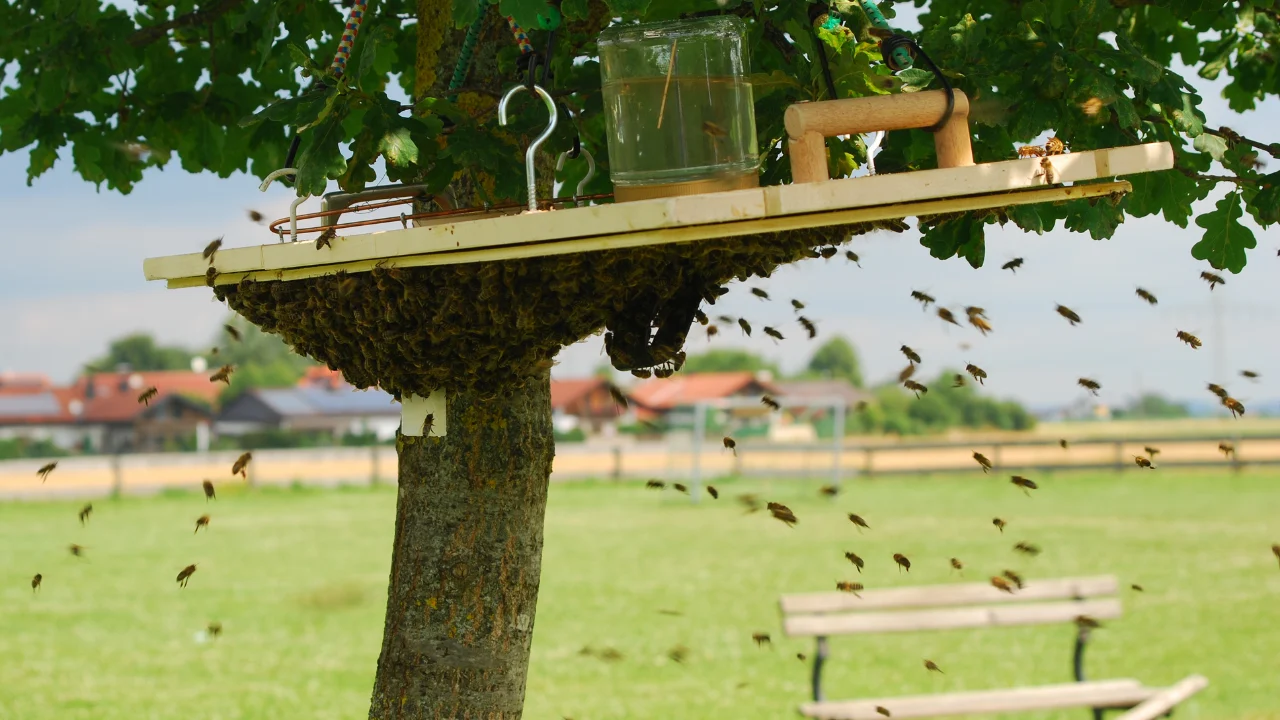
A Practical Backyard Beekeeping Checklist
Before placing a hive in a residential yard, ask yourself:
- Is it legal? Check current state, county, city and applicable property rules.
- Do I need to register the apiary or obtain a permit?
- Are there limits on hive numbers?
- Are there minimum setbacks or flyway requirements?
- Can I position the entrance away from neighbours and public areas?
- Can I provide permanent water before the bees find somebody else’s?
- Can children and pets be kept safely away from the apiary?
- Can I inspect and manage the hive without disrupting surrounding properties?
- Can I move or requeen a problem colony quickly if necessary?
- Do I have neighbours with whom this is realistically going to work?
That final question is not written into many ordinances, but it deserves a place on the list.
So, Can You Keep Bees in Your Backyard?
In many places, absolutely.
Urban and suburban bees can thrive, and residential colonies can provide enormous enjoyment, excellent honey and useful pollination. But successful backyard beekeeping requires more than checking whether a law contains the word “beehive.”
You need a legal location, sensible hive placement, manageable colony numbers, water, access control and bees with a temperament compatible with close neighbours. You also need enough judgement to recognise when a particular site simply is not suitable.
If you have reasonable neighbours, sensible local regulations and a yard where bees can come and go without dominating everybody else’s space, backyard beekeeping can work beautifully.
If every hive inspection causes children, dogs and neighbours to evacuate the street, something needs to change.
Bees are remarkably adaptable. Good beekeepers should be too.
Backyard Beekeeping Laws FAQs
Is it legal to keep bees in your backyard?
In many areas, yes, but backyard beekeeping rules vary between states, counties and cities. Some locations require hive registration, permits, minimum setbacks, flyway barriers or limits on the number of colonies you can keep. Always check the rules that apply to your specific property before buying bees.
How far should a beehive be from a neighbour’s property?
There is no universal distance that applies everywhere. Local regulations may specify setbacks from property boundaries, roads or neighbouring homes, while some allow closer placement if a fence or hedge directs the bees’ flight path above head height. Good placement matters just as much as distance.
Can my neighbour complain about my bees?
Yes. A neighbour can complain if they believe your bees are creating a nuisance or safety problem. Bees visiting flowers is normal behaviour, but repeated stinging incidents, bees crowding a neighbour’s water source or an excessively defensive colony should be investigated and managed.
Do backyard beekeepers need to register their hives?
In some states and local jurisdictions, apiary or hive registration is required. Other areas may require permits or impose additional residential beekeeping conditions. Check with your state agriculture department, local council or county and a local beekeeping association.
How can I stop my bees bothering the neighbours?
Provide your bees with a reliable water source, point hive entrances away from neighbouring activity and use a fence or hedge to lift their flight path above people. Keep colony numbers manageable and deal promptly with unusually defensive colonies. A jar of honey can also do remarkable things for neighbour relations.
What should I do if my backyard hive becomes aggressive?
Do not ignore a colony that is repeatedly pursuing or stinging people beyond the immediate hive area. Check for causes such as disturbance, queen problems or colony temperament and consider requeening or relocating the hive. In a residential area, a dangerously defensive colony needs to be dealt with promptly.

Dr Garth A. Cambray is a beekeeper, biotechnologist and researcher with nearly three decades of practical beekeeping experience. He holds a PhD in Biotechnology from Rhodes University and has worked extensively in honey production, fermentation biotechnology and value-added bee products. View Dr. Garth Cambray’s credentials, research and experience.

Ready to Start Beekeeping?
Take the next step with our free beginner beekeeping guide. Learn what equipment you need, how to set up your first hive and what to expect during your first season.
You Might Also Like:
 How Many Beehives Per Acre? Finding the Best Hive Density
 How Many Beehives Can One Person Manage? A Practical Guide
 How Much Does It Cost to Start a Bee Farm? A Practical Guide
 Warre Hive vs Langstroth: Which Is Better for Beginners?
 Simple Ways to Keep Honey Bees Hydrated Without Harm
 How Much Do Beehives Cost? Ultimate Beginner Budget Guide