
How many beehives per acre can you keep? For ordinary backyard or honey-production beekeeping, there is no useful fixed number of hives per acre. Your bees do not restrict themselves to the acre of land on which their hive is sitting; they forage across hundreds or thousands of surrounding acres. The real limit is therefore the amount and quality of nectar and pollen available within flying distance of the apiary, together with climate, season and competition from other bees.
You may see figures such as 1–3 hives per acre quoted online. These numbers are more useful when talking about managed crop pollination, where a grower is deliberately placing colonies beside a flowering crop. They should not be interpreted as meaning that a person with one acre can keep three hives, somebody with ten acres can keep thirty, and somebody fortunate enough to own 100 acres should immediately order 300 beehives. If you are still planning your first apiary, our beginner beekeeping guide puts hive numbers into the wider context of starting well.
In practice, I prefer to think in terms of the carrying capacity of an apiary rather than hives per acre. Start with a sensible number of colonies, watch their strength and honey production through good and poor seasons, and increase gradually while the site continues to support them. The moment additional colonies cause average production to fall, feeding requirements to increase or robbing pressure to become excessive, your bees are beginning to tell you where the limit is.
Apiary location and hive numbers need to fit into the rest of your first beekeeping decisions rather than being treated in isolation.
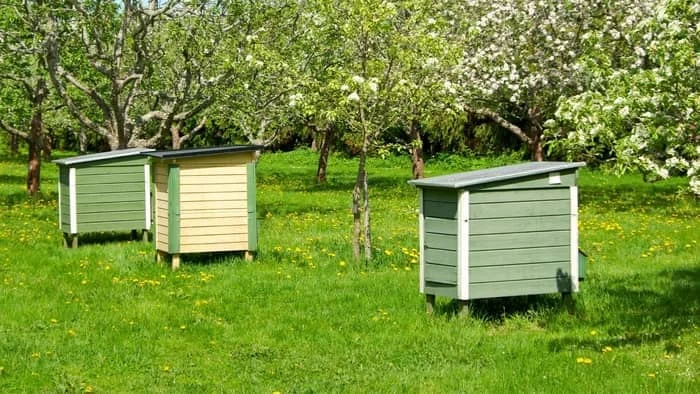
TL;DR: How Many Beehives Per Acre?
- There is no universal number of beehives per acre for honey production.
- Bees forage far beyond the property on which their hive sits, so surrounding forage matters more than your land area.
- 1–3 colonies per acre can be a reasonable pollination stocking rate for some crops, but pollination recommendations vary substantially by crop, colony strength and conditions.
- For a backyard beekeeper, 2–3 colonies can potentially occupy a surprisingly small property if local rules allow it and there is abundant forage surrounding the site.
- For a larger apiary, start with a moderate number of colonies and monitor honey yield, colony strength, feeding requirements and robbing as you increase numbers.
- Bees prefer profitable forage close to the hive but can fly several miles when worthwhile nectar or pollen is available farther away.
- The practical question is therefore not simply “How many acres do I own?” but “How much forage is available within flying distance of my bees?”
Why Hives Per Acre Is the Wrong Calculation for Most Beekeepers
The question makes perfect sense. If somebody owns five acres and wants to keep bees, the natural assumption is that there must be a formula saying how many colonies those five acres can support.
The problem is that bees have absolutely no respect for property boundaries.
Your colony may be sitting on half an acre in your backyard, but its workers can be collecting nectar from gardens, roadside vegetation, flowering trees, crops and bushland spread across a huge surrounding area. Conversely, you may own 100 acres of land that provides almost nothing useful to bees during much of the year.
This is why two apparently similar properties can support very different numbers of colonies. The acreage underneath the hives matters much less than what is flowering in the landscape around them.
If you are deciding how large you could eventually make an apiary, our first-season how many hives one person can manage looks at the other side of this question: even if the land can support the bees, you still need to be able to manage them.
How Far Will Honey Bees Fly to Find Food?
Honey bees can travel several miles from their hive when they need to, although this does not mean they want to fly that distance. If excellent forage is available close to home, there is little advantage in wasting energy flying miles to find the same reward.
I once kept an apiary at a very remote site where there was a Eucalyptus plantation approximately six miles away as the crow flies. When those trees flowered, the bees made, rather ironically, a beeline straight towards them. You could actually see the line of bees flying towards the Eucalyptus trees on the horizon.
That experience taught me an important lesson about apiary planning. What appears to us to be a remote nectar source may still be very much part of a colony’s usable landscape if the reward is good enough.

How Much Land Can Bees Potentially Forage Over?
This is where the numbers become interesting.
If bees forage three miles from a hive, they are potentially searching within a circle covering roughly 28 square miles, or about 18,000 acres. A four-mile radius represents more than 50 square miles, or roughly 32,000 acres.
That does not mean every flower throughout that enormous circle is equally valuable or that every colony routinely works the entire area. Much of the landscape may contain roads, buildings, water, grass, crops that are not flowering or plants that are useless to honey bees.
It does, however, demonstrate why calculating honey-production capacity based simply on the number of acres you own is unlikely to work.
Your one-acre backyard may sit in the middle of thousands of acres of excellent bee forage. Your hundred-acre property may sit in the middle of a floral desert.
Why Shorter Foraging Distances Are Better
A honey bee is a little like a vehicle. It carries material from point A to point B, and in doing so incurs wear and consumes energy. The farther the bee flies between the hive and the flowers, the more resources that journey requires and the fewer profitable loads it can potentially bring home.
Ideally, I want my bees to have excellent forage close to their colonies. If a worker can leave the hive, fly a relatively short distance, fill herself with nectar or pollen and return, that is a highly efficient trip. If she has to travel several miles each way to obtain exactly the same reward, a much greater proportion of the collected energy has effectively been spent collecting it.
This is another reason that the theoretical maximum flight distance is not the most useful number when evaluating an apiary. A site surrounded by excellent forage within a short distance can be far more productive than one where the bees can reach food, but have to work extremely hard to do it.
What Actually Determines How Many Hives an Apiary Can Support?
The number of hives a location can support is ultimately determined by the resources available to those colonies and how those resources change during the year.
Bees collect nectar and pollen from flowers. Nectar supplies carbohydrates and becomes the raw material from which honey is produced, while pollen provides proteins and other nutrients required by the colony. A landscape containing abundant, varied forage over a long flowering season is therefore very different from one that provides a spectacular two-week nectar flow followed by months of very little.
This is why I think of every apiary as having a changing carrying capacity rather than a fixed number of hives per acre.
Nectar Availability
Nectar is finite. If you put more and more colonies around the same limited nectar resource, eventually there are simply more mouths competing for approximately the same amount of food.
During a strong nectar flow, that limitation may be almost invisible. During a drought or seasonal dearth, it can become painfully obvious.
A site that comfortably supports 50 colonies during an excellent year may not necessarily support those same colonies without feeding during a poor year. I would therefore never calculate maximum hive numbers solely from the best season I had ever experienced.
Pollen Variety
Pollen matters just as much as nectar when evaluating a site. Colonies need pollen to rear brood, and having access to a diversity of suitable flowering plants can help provide a broader nutritional base than relying upon a single plant species.
The ideal apiary therefore does not just have lots of flowers. It has useful flowers appearing at different times so the colony experiences as few nutritional gaps as possible.
This is one reason towns and suburban areas can sometimes be surprisingly productive bee environments. Gardens contain enormous numbers of plant species, and because gardeners tend to choose plants that flower attractively at different times of year, urban landscapes can provide remarkably varied forage.
Climate and Season
Rainfall changes everything.
I have worked apiaries where the floral picture can be dramatically different from one year to the next. I have even had bees on the same apiary produce noticeably different-tasting honey in the same month of consecutive years simply because different plants responded to the weather and flowered.
Consequently, the answer to “How many hives can this location support?” may itself change throughout the year.
A commercial beekeeper can respond by moving colonies. A backyard beekeeper generally cannot, which makes conservative stocking and awareness of seasonal dearths much more important.

Competition From Other Bees
Your colonies are probably not the only bees using the landscape.
There may be managed honey bee colonies belonging to other beekeepers, feral honey bee colonies and many species of native bees and other pollinating insects sharing some of the same floral resources.
This is another weakness in any simple acres-per-hive equation. You could survey a beautiful landscape full of flowers and conclude that it can support a large apiary without realising that somebody already has fifty colonies hidden over the hill.Use Satellite Maps to Survey the Area Around Your Apiary
One of my favourite tricks when assessing a potential apiary site is to look at it from above. Satellite mapping is extremely useful because bees see and use a landscape very differently from the way we see it while standing beside the hives.
I once had a potential apiary site that appeared to be nothing more exciting than a bland grassy field. Looking at the surrounding area on satellite imagery revealed an old abandoned citrus orchard about half a mile away in a hidden valley. It contained roughly twenty acres of trees, including Eureka lemons that flowered for an extended period. Standing at the apiary site, I would never have known the orchard was there.
When assessing a location, look several miles around the proposed hive site and start identifying likely resources. Look for orchards, flowering crops, forests, bushland, wetlands, towns, suburban gardens, parks and other areas that could contain significant flowering plants.
The exercise will not give you a magic hive number, but it gives you a much better understanding of the landscape your bees will actually occupy.
What Should You Look for Around an Apiary?
Satellite imagery is only the beginning. Once you identify potentially useful areas, it is worth visiting them if possible because a green patch on a map does not tell you exactly what plants are there.
I would look for:
- large flowering trees;
- orchards;
- flowering agricultural crops;
- wildflower areas;
- diverse gardens and urban vegetation;
- native bushland;
- reliable water — see our guide to providing water for honey bees;
- seasonal flowering patterns;
- pesticide exposure;
- competing apiaries;
- and obvious periods when very little is likely to flower.
Keep updating this mental map as you learn the area. After a few years, you begin recognising which flowers produce the important flows and which seemingly impressive blooms your bees largely ignore.
Be Careful Around Landfills and Unreliable Food Sources
One thing I generally try to avoid is placing apiaries close to landfill sites. Bees are opportunistic and may investigate sugary liquids, discarded drink containers and other attractive waste.
I once knew a beekeeper who deliberately placed colonies near landfill sites outside Los Angeles before spring because he regarded the discarded sugary material as “free sugar.”
This always struck me as just a bit gross.
More importantly, uncontrolled food sources are not something around which I would design an apiary. I want colonies gathering nectar and pollen from known floral resources, not cleaning residues out of somebody’s garbage.
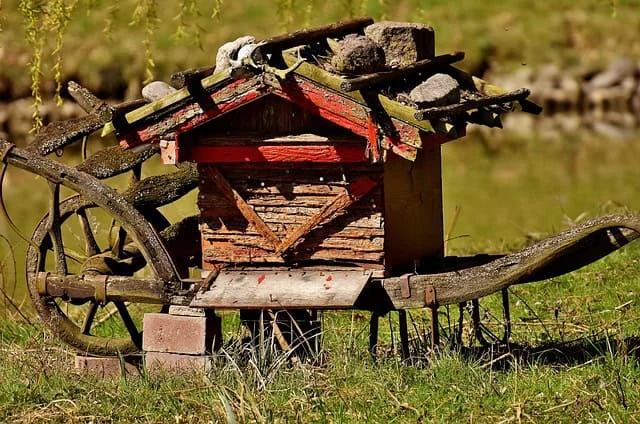
So, How Many Hives Per Acre for Honey Production?
For ordinary honey production, I would not use a hives-per-acre formula at all.
Instead, begin with a modest apiary and use the colonies themselves as measuring instruments. Watch their honey production, brood production, food stores and behaviour over several seasons. If the colonies remain strong and productive, you can increase the number gradually.
Suppose you start with five colonies and they perform exceptionally well. Moving to ten may tell you more. If ten continue performing well, perhaps you trial fifteen or twenty. The precise steps depend on your experience, available equipment and how rapidly you want to expand. Physical placement is a separate question, so also consider how far apart beehives should be placed as the apiary grows.
Eventually, you may notice that increasing colony numbers no longer increases total production in the way you expected. The average honey yield per colony begins to decline, colonies need more feeding during lean periods or competition becomes apparent.
At that point, you have discovered something much more valuable than an internet rule of thumb: the approximate carrying capacity of your actual apiary under your actual conditions.
What Does “1–3 Beehives Per Acre” Actually Mean?
This is worth separating from honey production because the figure does have a legitimate use.
When bees are deliberately brought into a flowering agricultural crop for pollination, recommendations are often expressed as colonies per acre. Depending on the crop, weather, colony strength, competing flowers and required pollination intensity, recommendations may range from less than one colony per acre to several colonies per acre.
In that situation, the question is not “How much landscape can these colonies live on permanently?” It is “How many strong colonies should we temporarily place around this crop to get enough bee visits while it is flowering?”
Those are completely different calculations.
A field may therefore receive several hives per acre during bloom even though nobody would claim the same field can feed those colonies throughout the entire year.
The Law of Diminishing Returns in an Apiary
Beekeeping, like many other forms of production, eventually encounters diminishing returns. If you keep adding colonies to the same forage area, there normally comes a point where additional hives result in less production per colony.
Imagine that a particular location provides enough excess nectar for fifty colonies to produce a good surplus. If you place one hundred colonies onto exactly the same resource, you have not magically doubled the number of flowers.
The effect may not appear immediately because bees can alter where they forage, flowering changes throughout the season and colonies differ in strength. Over time, however, honey yield per colony provides one of your most useful signals.
Excessive colony density can also contribute to robbing when resources become scarce. Strong colonies searching for food may discover weaker neighbours, and what started as a productive apiary can become rather unpleasant very quickly.
Can the Carrying Capacity of an Apiary Improve Over Time?
It can, but I would be careful about assuming that merely adding more honey bee colonies will automatically make it happen.
I have had apiaries where I felt the site became more productive over time. Local vegetation changed, colonies adapted well to the location and the number of productive hives I could maintain appeared to increase. Those observations are useful when managing an individual apiary, but I would treat them as observations rather than a universal rule.
Land management can certainly improve bee forage. Planting suitable flowering trees and shrubs, allowing useful wildflowers to establish, reducing unnecessary herbicide use and maintaining flowering habitat can all change the resources available to bees over time.
If the landscape genuinely becomes better, then the carrying capacity may increase. The important thing is to confirm this through colony performance rather than assuming it has happened.
How Do You Know if You Have Too Many Hives in One Apiary?
The bees will normally give you clues.
If increasing your hive count coincides with declining honey yield per colony, more frequent feeding, poor stores during dearth periods or increasingly aggressive robbing, I would seriously consider whether the site is overstocked.
One poor season by itself does not prove there are too many colonies. Drought, unusual temperatures and failed flowering events can reduce production even at lightly stocked apiaries. This is why several seasons of records become so useful.
Compare your colonies with previous years and, if possible, with colonies at your other apiary locations. Over time you begin separating a poor season from a poor site and a poor site from an overstocked one.

Does the Size of Your Property Limit How Many Hives You Can Keep?
From the bees’ nutritional perspective, not necessarily.
A person on a small suburban property may be surrounded by kilometres of excellent gardens and flowering trees. The bees can therefore have access to far more forage than somebody keeping colonies on a much larger but relatively barren rural block.
There are, however, completely different practical limits to consider. Local regulations, neighbours, access, hive temperament, flight paths and nuisance risks can restrict the number of colonies appropriate for a small property even when forage is abundant.
This is why ecological carrying capacity should never be confused with how many hives it is sensible or legal to put in your backyard. Our guide to bees, neighbours and backyard beekeeping laws covers those separate practical limits.
Hive Type Does Not Create More Forage
Beginners sometimes focus heavily on the type of hive when thinking about production. The hive design can certainly change how you work the colony and how convenient honey harvesting is, but it cannot create flowers around your apiary. If you are still choosing equipment, our comparison of the best beehive types for beginners helps separate management convenience from forage capacity.
This applies to conventional hives and newer systems alike. A Flow Hive sitting in poor forage is still a colony sitting in poor forage.
This decision becomes much easier once you understand our plain-English practical Flow Hive review, especially during your first season. The important thing is to separate the convenience of the equipment from the biological requirements of the bees living inside it.
What Does It Cost to Add More Hives?
Another useful brake on enthusiastic expansion is money.
If your landscape could theoretically support twenty colonies, that does not mean buying twenty colonies immediately is sensible. Each additional hive means more boxes, frames, bees, protective and handling equipment, honey-processing capacity and ongoing management. For a beginner, a beehive starter kit can also help show how those first equipment costs are bundled together.
Before moving on, our new-beekeeper cost of starting a bee farm gives you the broader financial context needed to decide whether increasing colony numbers makes sense.
If you are simply calculating what another hive or two would cost, see our hands-on current beehive costs before assuming the wooden boxes will be the only significant expense.
A Practical Way to Find Your Ideal Hive Number
Rather than asking somebody for the perfect number of hives per acre, I would use a simple process.
Start conservatively. Learn what flowers in your area and when. Watch several seasons if possible, because an exceptional year can make a mediocre apiary look wonderful and a drought can make an excellent location look useless.
Then add colonies gradually while recording roughly how much surplus honey each one produces and how well the colonies maintain their stores. You do not need a scientific experiment; reasonably consistent notes are enough to reveal trends.
If adding more colonies continues increasing your total honey crop without seriously reducing average colony performance, the site probably has room to grow. When the opposite begins happening, stop adding hives and consider reducing numbers or establishing another apiary.
That approach takes longer than reading a number from a table, but it produces an answer that is actually useful.
Last Thoughts: How Many Beehives Per Acre?
The best answer is that acreage alone does not determine how many beehives you can keep. Bees live in a landscape, not within the lines on your property title.
For backyard and honey-production beekeeping, surrounding nectar and pollen resources, seasonal conditions, competing colonies and the efficiency with which your bees can reach those resources matter far more than whether you own one acre or one hundred.
Pollination is different. There are legitimate crop-specific recommendations expressed as colonies per acre, and figures around 1–3 hives per acre are common for some crops. Those rates are intended to provide enough pollinating bees during bloom and should not be mistaken for year-round apiary carrying capacity.
My preferred approach is therefore to start with a sensible number of colonies, study the landscape, use satellite maps to look for resources you cannot see from the apiary and increase hive numbers gradually while measuring what the bees actually produce.
Google Maps is very useful for this. A drone can be useful as well, the type you fly, not the male honey bee.
The bees will eventually tell you how many colonies the area can support. Our job is to pay attention before they have to shout.
Frequently Asked Questions
How many beehives can I keep on one acre?
There is no universal one-acre limit based on forage alone because honey bees forage well beyond your property. A small property surrounded by abundant flowering plants may support several colonies, while a much larger property in poor forage may support fewer. Local regulations, neighbours and safe hive placement may impose separate limits.
Is 1–3 beehives per acre a good rule?
Only in the right context. Rates around 1–3 colonies per acre are used for pollinating some agricultural crops, but the recommended number varies by crop and conditions. It should not be used as a general rule for permanent honey-producing apiaries.
How far will honey bees forage from their hive?
Honey bees commonly concentrate on profitable resources relatively close to their hive when these are available, but they are capable of travelling several miles to valuable forage. The distance changes substantially with landscape, season and resource availability.
Can I have several beehives in a small backyard?
Potentially, yes, because the bees forage over the surrounding landscape rather than just your backyard. Whether it is appropriate depends on local regulations, neighbours, bee temperament, flight paths and your ability to manage the colonies safely.
How many hives should I put in one apiary?
Start conservatively and increase hive numbers gradually. Monitor honey production per colony, food stores, feeding requirements and robbing pressure. When increasing colony numbers begins reducing average performance, you may be approaching the carrying capacity of that site.
What happens when an apiary has too many hives?
Colonies may compete more heavily for limited nectar and pollen, honey production per hive may decline, feeding requirements can increase during shortages and robbing may become more common.
Does owning more land mean I can keep more bees?
Not necessarily. The type and seasonal availability of flowering plants surrounding the apiary matter much more than the area shown on your property title. Bees can forage across land belonging to many different owners.
Can I improve the number of hives my property supports?
Potentially. Improving bee forage by establishing suitable flowering plants and trees and maintaining a succession of flowers across the season can increase available resources. Any increase in hive numbers should still be gradual and guided by actual colony performance.

Dr Garth A. Cambray is a beekeeper, biotechnologist and researcher with nearly three decades of practical beekeeping experience. He holds a PhD in Biotechnology from Rhodes University and has worked extensively in honey production, fermentation biotechnology and value-added bee products. View Dr. Garth Cambray’s credentials, research and experience.
Ready to Start Beekeeping?
Take the next step with our free beginner beekeeping guide. Learn what equipment you need, how to set up your first hive and what to expect during your first season.
You Might Also Like:
 How Many Beehives Can One Person Manage? A Practical Guide
 Bees, Your Neighbours and the Law: Can You Keep Bees in Your Backyard?
 How Much Does It Cost to Start a Bee Farm? A Practical Guide
 How Much Honey Can You Get From One Hive?
 How Much Do Beehives Cost? Ultimate Beginner Budget Guide
 Warre Hive vs Langstroth: Which Is Better for Beginners?