Finding the queen becomes much easier once you stop trying to inspect every bee. Start in the brood nest, concentrate on frames containing eggs and young open brood, and scan for the one bee that looks and moves differently from the workers around her. Her long abdomen is the obvious clue, but her movement and the small group of workers often attending her can make her stand out just as clearly. If you are still learning routine inspections, our beginner beekeeping guide puts queen-finding into the wider first-season skill set.
This is one of those beginner beekeeping skills that looks impossible the first few times and then suddenly becomes much easier. A large colony can contain tens of thousands of workers, so staring at every bee individually is the wrong game.
TL;DR: Go straight to the brood nest, look first at frames with eggs and young larvae, hold each frame steadily in good light and scan the whole comb rather than individual bees. Look for a longer abdomen, a different walking pattern and workers making space around one particular bee. If you see fresh eggs and normal young brood but cannot find the queen, you may not need to find her at all.
The Trick: Look for the Bee That Is Different
Our brains are good at spotting something that breaks a pattern. If I ask you to find one particular apple in a pile of apples, it is hard work. If I ask you to find a banana in that pile, your brain finds it immediately because you are really looking for “not an apple”.
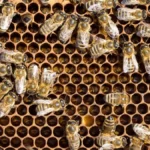
Do the same thing with a frame of bees. Do not inspect worker number one, worker number two, worker number three and so on. Scan the frame for “not a worker”. Once your eye learns the shape of a queen, she often seems to jump out of the crowd.
What Does a Queen Bee Look Like?
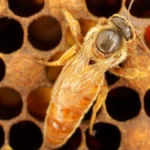
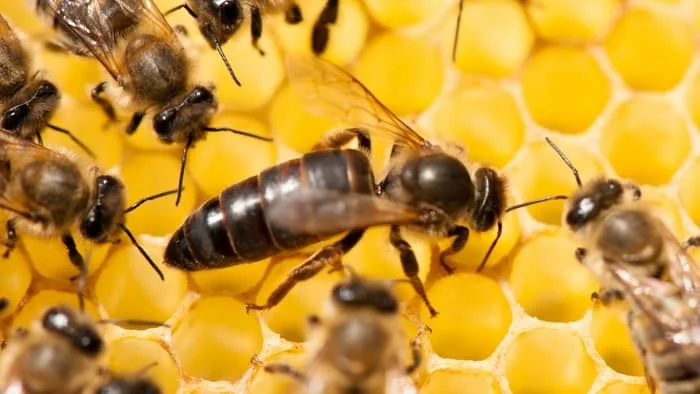
The queen is the long-bodied bee in the colony. Her abdomen normally extends well beyond the tips of her wings, and a mature laying queen often looks noticeably longer than the workers around her. She also tends to walk with a more deliberate movement across the comb while workers frequently turn toward her, touch her with their antennae and make space around her.
I have described a queen before as looking like a bee on steroids, which visually is not a bad joke, but biologically it is not the reason she develops differently. Queen and worker larvae develop along different pathways because of differences in larval nutrition and the signalling associated with royal jelly and caste development. A strong laying queen can produce more than 2,000 eggs a day in peak conditions, which explains why so much of her adult anatomy is devoted to reproduction.
The queen bee looks like this:
How to Find the Queen Bee Step by Step
1. Go Straight to the Brood Nest
Do not waste time searching honey supers unless you have a specific reason to suspect the queen is there. The laying queen spends most of her working time around the brood nest. Start where the eggs and young brood are.
2. Check Frames With Eggs and Young Larvae First
A laying queen needs empty cells, so frames containing eggs, tiny larvae and polished open cells are prime places to look. She can be anywhere in the brood nest, but these frames give you a much smaller search area than the whole hive.
If you find fresh eggs and normal young brood but never see the queen, that is still valuable information. It tells you that a laying queen was present very recently. Understanding bee brood and the brood nest makes that evidence much easier to read. You do not have to turn every inspection into a royal manhunt.
3. Remove Frames Gently
Lift brood frames slowly so bees do not tumble off into the bottom of the hive. A queen running around on the bottom board is much harder to find than one walking across a comb. Give yourself room by moving an outside frame first if necessary, then work carefully through the brood nest.
4. Scan the Whole Frame
Hold the comb in good light and let your eyes sweep across it. Look for the long abdomen first, then movement. A queen often walks steadily from cell to cell and may stop to inspect a cell before laying.
Also watch the workers around her. You may see a loose retinue of bees orienting toward the queen, antennating her and leaving a small moving space around her. Sometimes I spot the change in the workers before I consciously see the queen herself.
5. Check the Frame Edges Before Turning It
Queens can move away from light and slip around the edge of a frame while you are looking at the opposite side. Before rotating the comb, glance along the side bars and lower edge. This tiny habit saves a surprising amount of frustration.
If You Cannot Find the Queen, Read the Brood
Beginners sometimes assume that not seeing the queen means the hive is queenless. It does not. If you have eggs standing in the bottoms of cells, very young larvae and a normal brood pattern, the colony probably had a laying queen there within the last few days. The guide to what capped brood looks like gives another useful visual reference when you are learning to read those frames.
If you cannot find the queen and there are no eggs or young larvae, then queen status becomes a more important question. That is the point to work through how long a hive can be queenless and look carefully for developing queen cells.
Can a Phone App Find the Queen?
There is still an Android app called Bee Queen Detector that uses the phone camera and object-recognition software to identify a queen on a frame. It is a clever idea and it is fun to try.
I would still learn to find queens with your own eyes. The app developer itself asks users to submit videos to improve detection accuracy, which tells you the models are still being refined. Treat it as an extra set of digital eyes, not proof that the queen is or is not on a frame.
Marking the Queen Makes Life Much Easier
I once had a summer job where I had to open 50 hives every day, find the queens and weigh them. After enough repetitions you get very fast at queen spotting, but anything that makes her more visible helps enormously.
We marked queens so the colour on the thorax stood out immediately among thousands of brown and black bees. A breeder will often supply a marked queen if requested, and beekeepers also use dedicated queen-marking pens or labels. The existing Amazon link for the queen-marking item used in this article is preserved here: queen-marking aid.

How to Find the Queen in a Difficult Hive
Every now and then you get a hive where the queen simply refuses to appear. Before doing anything dramatic, close the hive up and try again later if circumstances allow. A calmer colony, different light or a slightly different brood distribution can make the next inspection much easier.
If I absolutely need to find a queen in a difficult hive, I have used a queen excluder as a sorting tool. This is a much more disruptive method, so I regard it as a last resort rather than something a beginner should do at every inspection.
My method is to arrange an empty brood box with a queen excluder so workers can move through while the queen is held back. I shake or brush the bees from brood frames into the sorting box, checking each comb because queens sometimes grip the comb and resist being shaken. Once the workers have moved back toward the brood, the queen is normally much easier to isolate against the excluder.
The exact box arrangement matters less than the principle: separate a large number of workers through an excluder while preventing the queen from passing through it. Work gently, avoid overheating or crushing bees, and do not use this method unless there is a genuine reason you must physically locate her.
What Can Go Wrong?
The Queen Flies Away
Queens can sometimes be surprisingly skittish, especially younger queens. I once had a queen fly out of a hive and land behind my ear. I knew she was there because she was piping. Once you have heard that sound properly, you remember it.
If a queen lands nearby, workers may gather around her and form a small cluster on the ground, vegetation or — if you are having one of those days — somewhere on you. Stay calm, collect the cluster gently and return the queen to the hive.
Workers Ball the Queen
Worker bees can ball and injure or kill a queen, particularly when they reject an unfamiliar queen or when colony recognition signals are disrupted. Ordinary brief contact during a careful inspection does not mean the workers will automatically kill her, but rough handling and queen introduction are situations where caution is sensible.
If a queen is lost or killed, the colony may need a replacement or may attempt to rear a new queen if suitable young brood is available.
Finding a Queen Bee FAQs
Do I need to find the queen at every hive inspection?
No. Fresh eggs, very young larvae and a normal brood pattern can show that a laying queen has been present recently. Physically finding her is useful when you need to mark, move, replace or inspect the queen herself, but it is not compulsory at every routine inspection.
What does a queen bee look like compared with a worker?
A laying queen usually has a noticeably longer abdomen that extends beyond her wings. She often walks differently from workers, and nearby bees may orient toward her and form a loose retinue around her.
Where is the best place to look for the queen?
Start in the brood nest and give priority to frames containing eggs, young larvae and open polished cells. Those are the combs on which a laying queen is most likely to be working.
Can marking the queen make her easier to find?
Yes. A visible mark on the queen’s thorax makes her stand out sharply against the surrounding workers. Marking is especially helpful in large colonies or when a beekeeper needs to locate the queen regularly.
What is queen piping?
Queen piping is a distinctive sound most commonly associated with virgin queens and queen rivalry or reproductive events in the colony. Hearing it can alert a beekeeper to the presence of a queen, although it is not a routine queen-finding method.
What should I do if I cannot find the queen?
First look for evidence of a laying queen: eggs, young larvae and a normal brood pattern. If those signs are present, you may simply have missed her. If they are absent as well, investigate whether the colony is queenless before resorting to disruptive sorting methods.
Can an AI phone app reliably find the queen?
An Android queen-detection app can assist by highlighting a possible queen in the camera view, but it should be treated as an aid rather than a definitive diagnosis. Visual recognition skills and brood evidence remain more reliable beekeeping tools.
Once you are comfortable finding queens, the next level is understanding what the colony is doing when queen status changes. The guides on queen cell stages and splitting a beehive without a queen take that skill further.

Dr Garth A. Cambray is a beekeeper, biotechnologist and researcher with nearly three decades of practical beekeeping experience. He holds a PhD in Biotechnology from Rhodes University and has worked extensively in honey production, fermentation biotechnology and value-added bee products. View Dr. Garth Cambray’s credentials, research and experience.
Ready to Start Beekeeping?
Take the next step with our free beginner beekeeping guide. Learn what equipment you need, how to set up your first hive and what to expect during your first season.